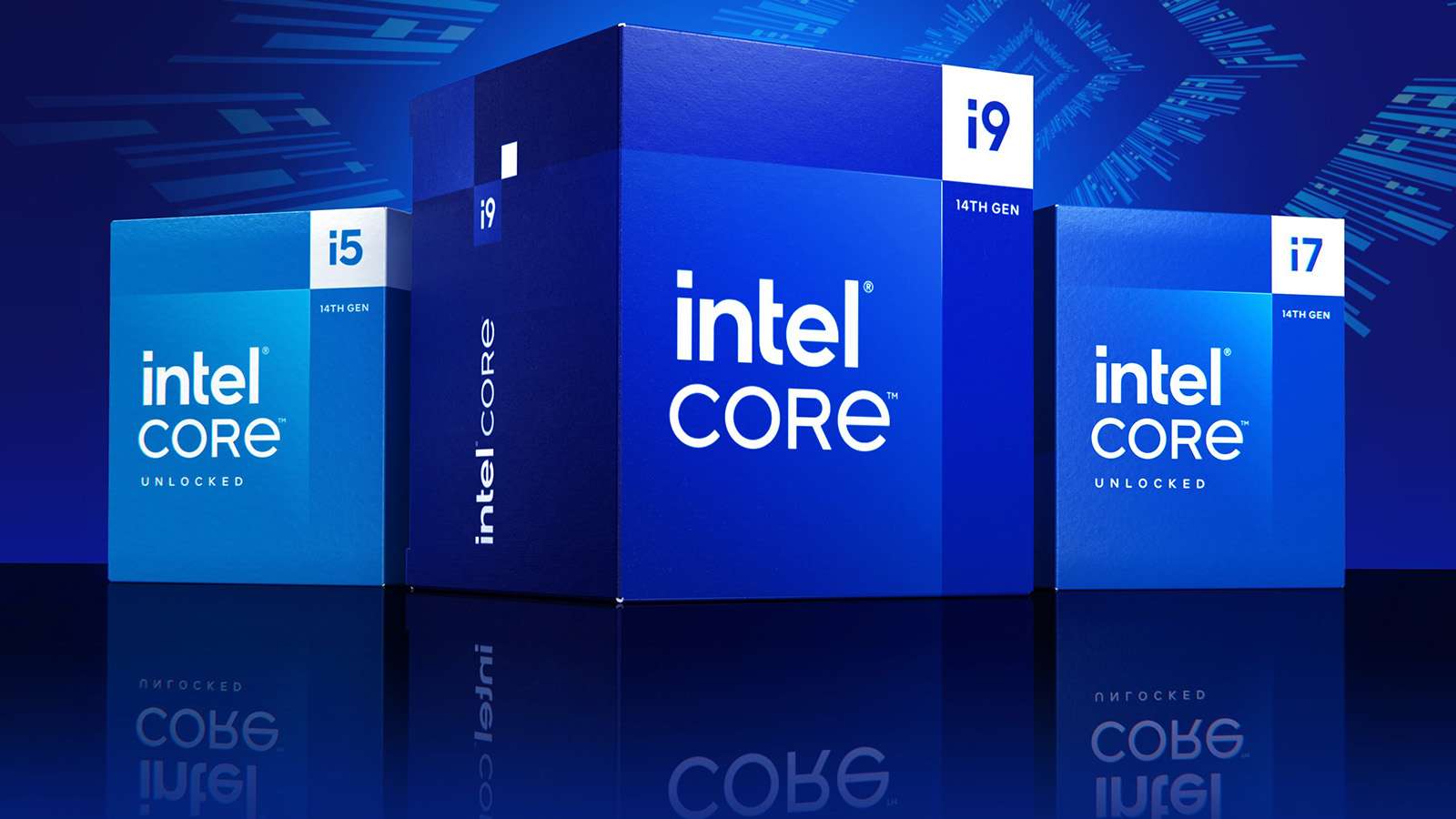
When it comes to Intel’s 14th Gen Core CPUs, the saying “saving the best for last” does not apply, as the best certainly isn’t the Core i9-14900K. It’s more likely that the Core i5 or the Core i7 take the crown and the reason is straightforward – we had higher expectations for the Core i9-14900K.
The 14th Gen Core family retains the Raptor-Lake architecture seen in the 13th Gen Core but promises higher clock speeds due to manufacturing improvements. Intel is transparent about its claims, stating that improvements will vary between applications. Some may see no change, while others could gain up to 10% in performance. However, as we found with the Core i9-14900K, the reality falls short. Any gains we observed were roughly around 2%, presenting a significant challenge for this CPU.
On paper, it appears remarkable, poised to establish a reasonable lead over the year-old Core i9-13900K. Unfortunately, its predecessor had already harnessed the architecture and process’s full potential, especially with Intel’s first 6GHz SKU, the Core i9-13900KS.
 The specifications suggest that the 14900K should be at least 3% faster when considering pure clock frequency gains, but, in reality, it often falls short of this mark. The core issue lies in the CPU’s ability to reach its advertised clock frequencies. It often operates at the same frequency as the Core i9-13900K, occasionally gaining a slight edge when the temperature allows.
| CPU | Core i9-14900K | Core i9-13900K |
|---|---|---|
| Number of Cores | 24 | 24 |
| P-Cores | 8 | 8 |
| E-Cores | 16 | 16 |
| Peak Turbo Frequency (2 Cores) | 6GHz | 5.8GHz |
| P-Core Max Clock | 5.6GHz | 5.4GHz |
| E-Core Max Clock | 4.4GHz | 4.3GHz |
| Total Cache | 36 MB | 36 MB |
| Base Power | 125 Watts | 125 Watts |
| Max Turbo Power | 253 Watts | 253 Watts |
| Price | R14,399 | R14,099 |
In gaming, the performance difference is negligible and virtually imperceptible under any circumstances. As such, it’s reasonable to expect the competition’s offerings, due within the next six months, to outperform the 14th Gen Core CPUs or, specifically, the Core i9-14900K using its flagship CPU, whatever that may be. This is easy to predict, for there’s been little to no progress Intel’s side where desktop offerings are concerned. The core i9-14900K, which held such promise before launch, is a great example of this.
The Core i9-14900K’s primary challenge, as previously mentioned, is its high thermal output. It quickly reaches its critical temperature, prompting a reduction in the clock ratio and voltage to remain operational. As a result, in highly threaded benchmarks, the CPU typically operates at a max clock frequency of 5,200MHz or just under 5,300MHz, well below the advertised 5.6GHz all-core clock and even lower than the 5.4GHz of the Core i9-13900K.

Even before testing, it was clear the CPU would run warmer than its predecessor. Individual P-Core voltage IDs on the test platform’s ROG Maximus Z790 Apex indicated values around 1.46 volts, significantly higher than the 1.34 volts seen on the 13900K. To those in the know, such a high voltage is a red flag, suggesting that the silicon isn’t better but rather that more voltage has been applied to achieve the higher clock frequency that’s advertised. Unfortunately, this high voltage isn’t unique to our sample but is fairly common among 14900K CPUs.
Further investigation revealed that we could configure the 13900K to match the specifications of the 14900K and achieve similar performance, temperature throttling conditions, and behaviour. This raises questions about what has actually changed, as the changes Intel states were made to the silicon are hardly discernible to the end user.

That being said, the Core i9-14900K may be a purposeless refresh, but it does present an opportunity to utilise the new tuning features Intel has introduced. Of these features, fast core throttle or per-core throttle control is likely to be more useful for end-users. This allows the CPU to maintain higher clocks by throttling only the overheating core within the CPU package. Although the specifics of this feature go beyond the scope of this review, per-core throttling offers more control over each core’s behaviour and response to temperature, enabling users to extract more performance from the CPU. While not a one-click solution, it’s worth exploring if you’re considering a Core i9-14900K.


As the flagship product, the Core i9-14900K falls short of expectations, while the Core i7 and Core i5 present compelling arguments for themselves. The Core i5 benefits significantly from increased clock frequency headroom, and the Core i7 gains an additional 4 E-cores, enhancing its multi-threading capabilities. These two CPUs represent the best of the generation, while the Core i9 struggles to justify its existence.
At this point, we’d only recommend the Core i9-14900K to those possibly upgrading from a 12th Gen Core i9. If you’re already using a 13th Gen Core i9, it’s probably best to stick with it, as the gains from this upgrade will be minimal at best.