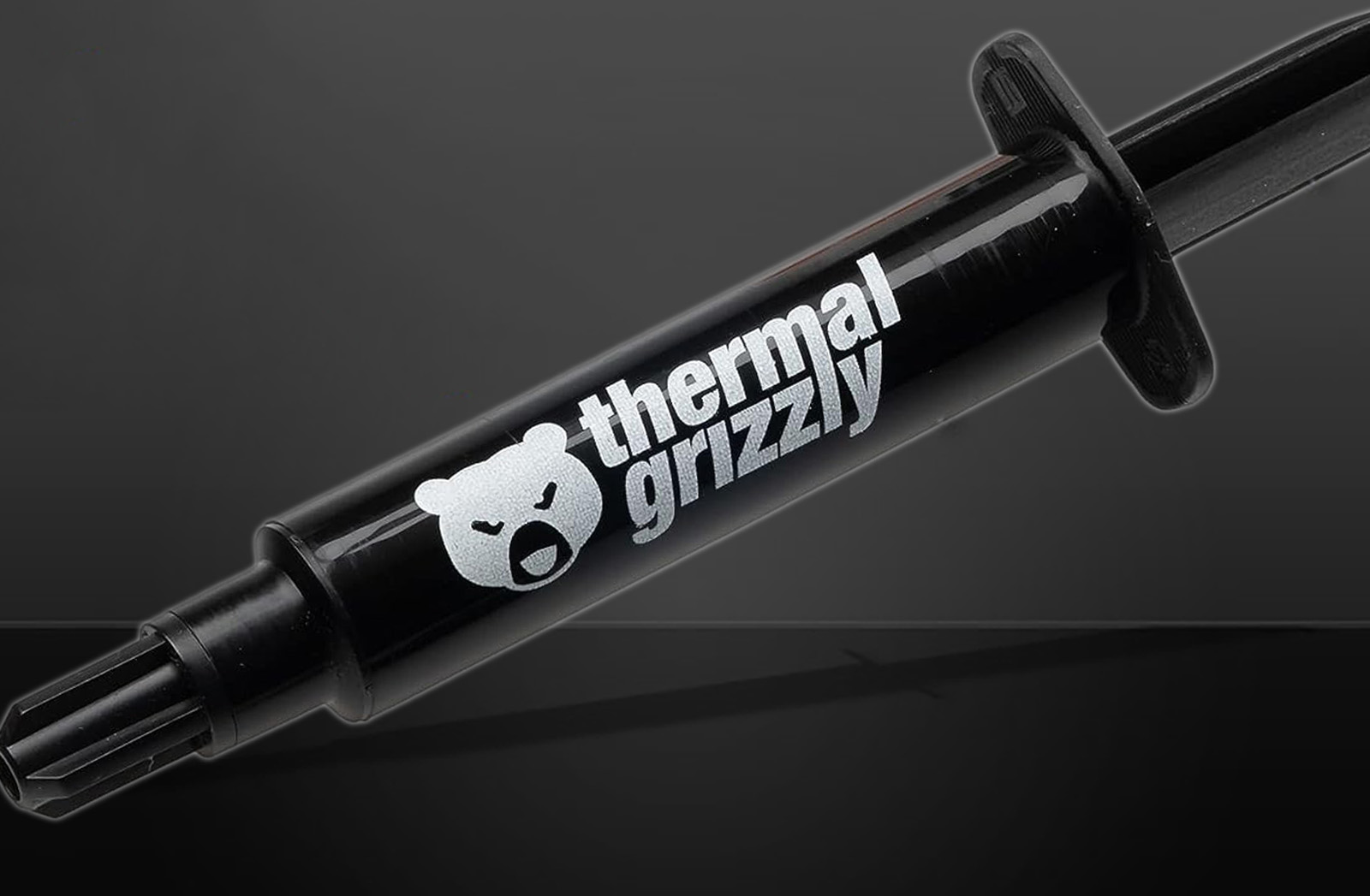
Since the inception of CPU coolers, thermal paste has also existed. Thermal paste, in essence, serves as a substance to enhance thermal conductivity between a heat-generating surface and another surface responsible for dissipating that heat. In our context, the heat-generating surface refers to the CPU IHS (Integrated Heat Spreader), while the heat-dissipating surface is the base of the heatsink. Thermal paste plays a critical role in maintaining an optimal operating temperature and preventing overheating. Therefore, selecting the most suitable thermal paste for your requirements is of utmost importance.
Typically, thermal paste is available in tubes, tubs, or syringes. While all manufacturers assert that their unique formulas yield the lowest operating temperatures due to superior thermal conductivity ratings, it is essential to recognize that thermal conductivity, while a legitimate scientific phenomenon and measurement, is not as crucial as it may seem. In certain cases, it may not even be relevant because end users lack information about the conditions under which those ratings were determined. As a general guideline, thermal conductivity ratings tend to increase as temperatures rise. Consequently, the watt per meter kelvin (w/mK) value, representing thermal conductivity, cannot be considered an absolute measurement applicable universally across different thermal paste manufacturers.

With that said, over the last decade or so, Thermal Grizzly has emerged as the preferred choice among thermal paste enthusiasts and gamers. Even here at the NAG office, we treat our best builds with Thermal Grizzly paste. Several factors contribute to this preference, but the most significant one is the consistently exceptional quality of Thermal Grizzly’s products. These pastes have undergone rigorous testing in extreme conditions by overclockers, repeatedly proving their reliability.
As a result, we have compiled a list of the four most popular Thermal Grizzly products, which should assist you in determining the most suitable one for your specific application. It is important to remember that performance should not be the sole benchmark when purchasing thermal paste. Factors such as longevity, ease of application, safety (whether conductive or non-conductive), and, of course, price should also be taken into consideration.
Aeronaut
Type: Thermal Grease
Available Quantities: 1g, 3.9g, 7.8g, 26g
Density: 2.6g/cm3
Thermal Conductivity: 8.5w/mK
Electrically Conductive: No
Typical Application: Air Coolers, AIO
Price Range: R193 – R879
Aeronaut stands as Thermal Grizzly’s most budget-friendly thermal paste option. As per the company’s own statement, Aeronaut caters primarily to beginners. Its core purpose is to outperform the pre-applied thermal paste on your CPU heatsink or cooler. The primary objectives here revolve around cost-effectiveness, ease of application, and long-lasting performance. Once applied, this paste should remain effective for years, provided it isn’t disturbed. While it pairs ideally with air coolers, nothing prevents one from using it with an AIO cooler as well. Priced just below R200 for a small 1g tube, it might be the cheapest option when compared to rival products. Nevertheless, it is Thermal Grizzly’s most cost-effective thermal paste solution.

Hydronaut
Type: Thermal Grease
Available Quantities: 1g, 3.9g, 7.8g, 26g
Density: 2.6g/cm3
Thermal Conductivity: 11.8w/mK
Electrically Conductive: No
Typical Application: AIO, Custom Loop
Price Range: R214 – R1,114
Hydronaut, as the name implies, targets water cooling setups, ranging from high-end AIO units to custom loops. Thermal Grizzly regards it as the ideal choice for these applications, making it a top recommendation for general use. Assuming identical testing standards, its thermal conductivity rating surpasses that of Thermal Grizzly Aeronaut. Therefore, at least in theory and all things being equal, it should lead to a cooler CPU. We will assess the extent of this difference on another occasion, but it’s safe to say there’s a significant overlap in their potential applications.
While Hydronaut seems superior on paper, the disparity between these two pastes is unlikely to be noticeable in everyday use. The slight price difference between Aeronaut and Hydronaut underscores their similarities as well. Longevity stands as a primary concern for Hydronaut, and it should ideally remain effective for years, enduring thousands of thermal expansion and contraction cycles.

Kryonaut
Type: Thermal Grease
Available Quantities:1g, 5.5g, 11.1g, 37g
Density: 3.7g/cm3
Thermal Conductivity: 12.5w/mK
Electrically Conductive: No
Typical Application: Extreme OC, Custom Loop
Price Range: R268 – R2,850
Kryonaut, is easily Thermal Grizzly’s most popular thermal grease. Its origins and design stem from the demands of extreme overclockers seeking high-performance thermal paste for use in extreme conditions, particularly when employing liquid nitrogen. This paste delivers exceptional thermal performance and commands the highest price within the range, second only to Conductonaut. Pure performance takes precedence here, with longevity and price relegated to secondary concerns. Consequently, it boasts a lifespan of roughly a year, enduring multiple thermal cycles before necessitating reapplication.
Within the enthusiast community, Kryonaut holds the top position, proving effective even at temperatures below -200°C without cracking, a pitfall that other thermal solutions fall victim to. This singular attribute has played a pivotal role in setting numerous CPU and GPU overclocking world records. When pursuing ultimate thermal performance, Kryonaut stands as a frontrunner, serving as the benchmark by which enthusiasts measure other thermal pastes.

Conductonaut
Type: Liquid Metal Composition
Available Quantities: 1g, 5g
Density: 6.24g/cm3
Thermal Conductivity: 12.5w/mK
Electrically Conductive: Yes
Typical Application: Air coolers, AIO, Custom Loop
Price Range: R385 – R1,286
Now, let’s delve into the highest-performing thermal paste solution available from Thermal-Grizzly: Conductonaut. What sets Conductonaut apart from others is its liquid metal composition, which grants it significantly superior thermal properties compared to silicon oil or nanoparticle pastes. While it may not function optimally at temperatures below 10°C where Kryonaut excels, in everyday usage, it outclasses everything, providing an 8-degree temperature advantage over traditional thermal solutions sometimes.
However, Conductonaut presents a notable challenge due to its conductive nature and application complexity. It’s not suitable for beginners and demands careful application and preparation. Even a slight spill onto other electrical components could spell disaster for your motherboard or CPU if not thoroughly cleaned. The performance edge it offers comes with substantial risk, prompting many users, including some enthusiasts, to opt for Kryonaut or other metal-based pad solutions from rival brands.
In terms of price, Conductonaut stands as the most expensive thermal solution offered by Thermal Grizzly. Nevertheless, a single syringe should suffice for more than 10 applications. Given its long-term effectiveness, the seal it creates between the heatsink and CPU IHS ensures years of reliable operation.

| Available Quantities | 1g, 5g |
|---|---|
| Density | 6.24g/cm3 |
| Thermal Conductivity | 73w/mK |
| Electrically Conductive | Yes |
| Typical Application | Air coolers, AIO, Custom Loop |
| Price Range | R385 – R1,286 |
We’ve discussed the four primary thermal paste solutions from Thermal Grizzly, but there are also extreme variants of both Kryonaut and Conductonaut pastes available. In general, Thermal Grizzly products tend to carry a higher price tag compared to competitors. Not surprising as they consistently deliver, keeping them in high regard among competitive overclockers and enthusiasts. Stay tuned for individual testing of each paste in future articles as we prepare for a comprehensive thermal paste roundup.