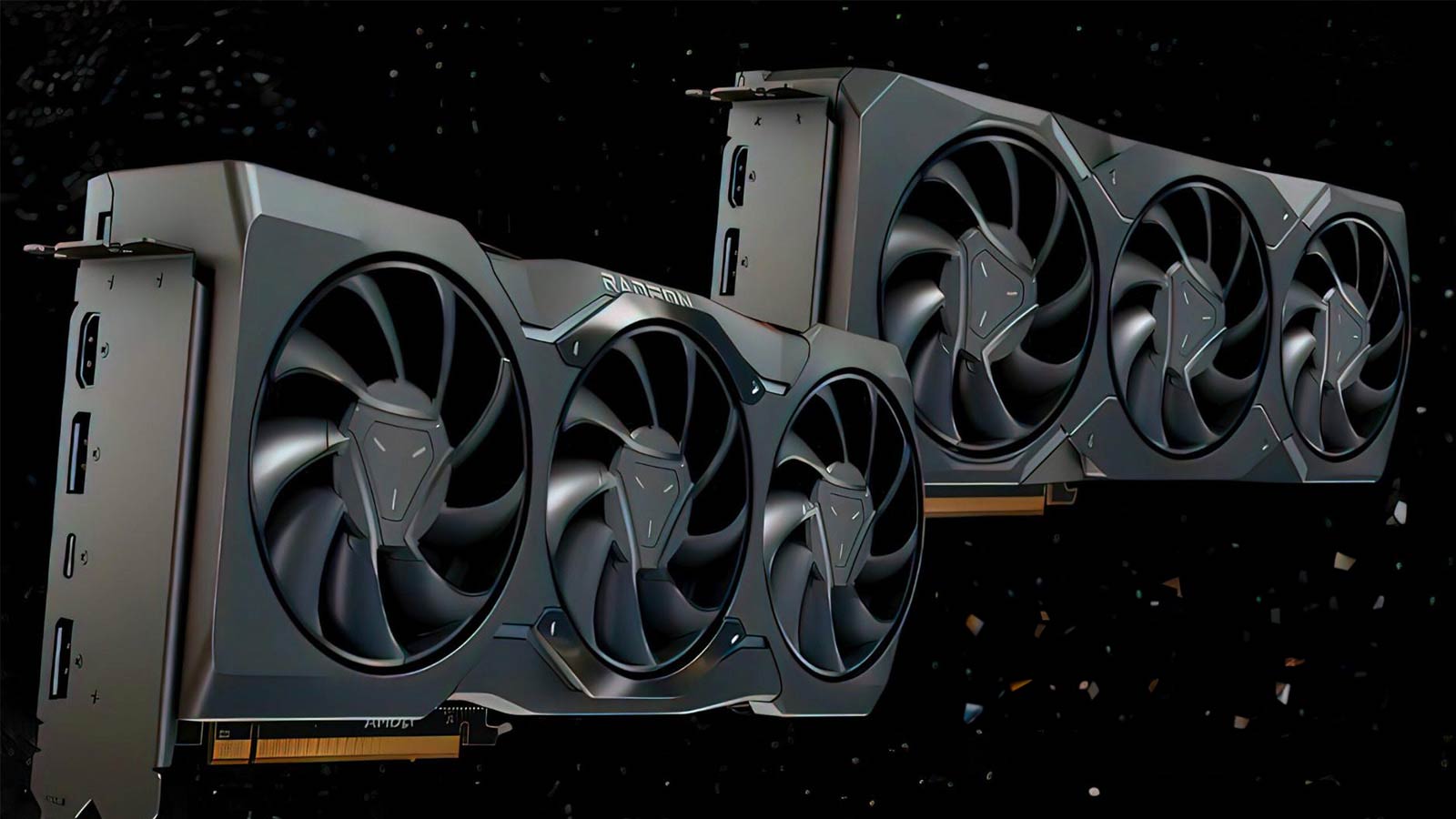
AMD has lifted the veil on their latest graphics cards, the Radeon RX 7800 XT and Radeon RX 7700 XT. Since the embargo on sales and reviews was lifted, reviews have gone live, pitting the new GPUs against NVIDIA’s formidable GeForce RTX 4070 and GeForce RTX 4060 Ti 16GB offerings.
The new additions to the Radeon RX 7000 family come bearing the hallmark chipset design that we first saw with the RX 7900 series. This design leverages a manufacturing strategy that combines TSMC’s advanced 5nm EUV node with the slightly older 6nm node, resulting in a cost-effective blend of efficiency and performance.
In terms of performance targets, both the RX 7800 XT and RX 7700 XT are targeting 1440P gaming at a lower price point than NVIDIA. The RX 7800 XT comes with an MSRP of $499 (about R9,600), while the RX 7700 XT offers a slightly more budget-friendly option at $449 (about R8,600). The $50 price difference between the two can be attributed to both GPUs utilising the same Navi 32 die and different memory configurations. The RX 7800 XT has all 60 compute units enabled, while the RX 7700 XT makes do with 54.

One of the places where AMD has an obvious advantage is in memory capacity and bandwidth figures. The RX 7800 XT boasts a healthy 16GB of GDDR6 memory, operating at an impressive 19.5Gbps. In contrast, the RX 7700 XT features a 192-bit bus and a memory frequency of 18Gbps. In terms of raw memory bandwidth, both these GPUs outclass their competition. This advantage promises to give AMD the upper hand, particularly in the realms of 1440P gaming and beyond.
Initial reviews have been pouring in, and the Radeon cards are making quite the splash, outpacing their NVIDIA counterparts in virtually all gaming scenarios that don’t heavily rely on raytracing. However, here lies the Achilles’ heel of the AMD RDNA architecture. Despite notable improvements to the 2nd generation Ray Accelerators, RDNA3 GPUs still struggle to match up to their direct competitors in raytracing-intensive tasks. However, in games that don’t lean heavily on raytracing, the 7800 XT and 7700 XT hold their ground and then some.

According to the reviews, the Radeon RX 7800 XT 16GB emerges as the hero, boasting an average 3% performance boost over the Radeon RX 6800 XT and a 4% edge over the competing GeForce RTX 4070 12GB, all while retailing for $100 less. The Radeon RX 7700 XT, on the other hand, surges ahead of its predecessor, the Radeon RX 6700 XT, with a substantial 22% performance boost. It doesn’t stop there; it also outpaces NVIDIA’s GeForce RTX 4060 Ti 16GB by a commanding 17%, all while being $50 more wallet-friendly.
At current price points, AMD’s offerings emerge as the more affordable option when compared to NVIDIA’s counterparts, which is bound to turn the heads of prospective buyers. On our turf, the Radeon RX 7800 XT offers a staggering price advantage of up to R3,000 compared to the GeForce RTX 4070. A similar price differential exists between the RX 7700 XT and the GeForce RTX 4060 Ti 16GB graphics card, making AMD’s proposition all the more enticing.
We eagerly anticipate our own numbers, so stay tuned for our in-depth reviews of both the AMD Radeon RX 7800 XT and Radeon RX 7700 XT graphics cards in the near future.