A few years ago, I fell in love with the Mate 20 Pro, a phone with fantastic gaming performance in PUBGM and one of the best cameras at the time – including an impressive macro lens.
Since then, a lot has changed in the Huawei world, but the company’s hardware has shown no signs of slowing down. While the company still does not have official Google Mobile Services on their devices, you can run many Google apps via an emulator called GBox, and most of them work as you’d expect. This is a big win for those of us who use Google services, and it begs the question, is Huawei smartphones a viable option for power users again?
Aesthetically speaking, the Huawei Mate 50 upholds the same design style we expect from the Mate series. The sizeable 6.74-inch display wraps around the side edges of the phone, making the screen feel larger. There is still a noticeable black border around the screen, with the sharp edge of the metallic bezel giving your hands a good grip on the phone. The under-screen fingerprint reader quickly unlocks the phone, while the notch at the top of the screen houses the camera sensor, earpiece, and speaker.
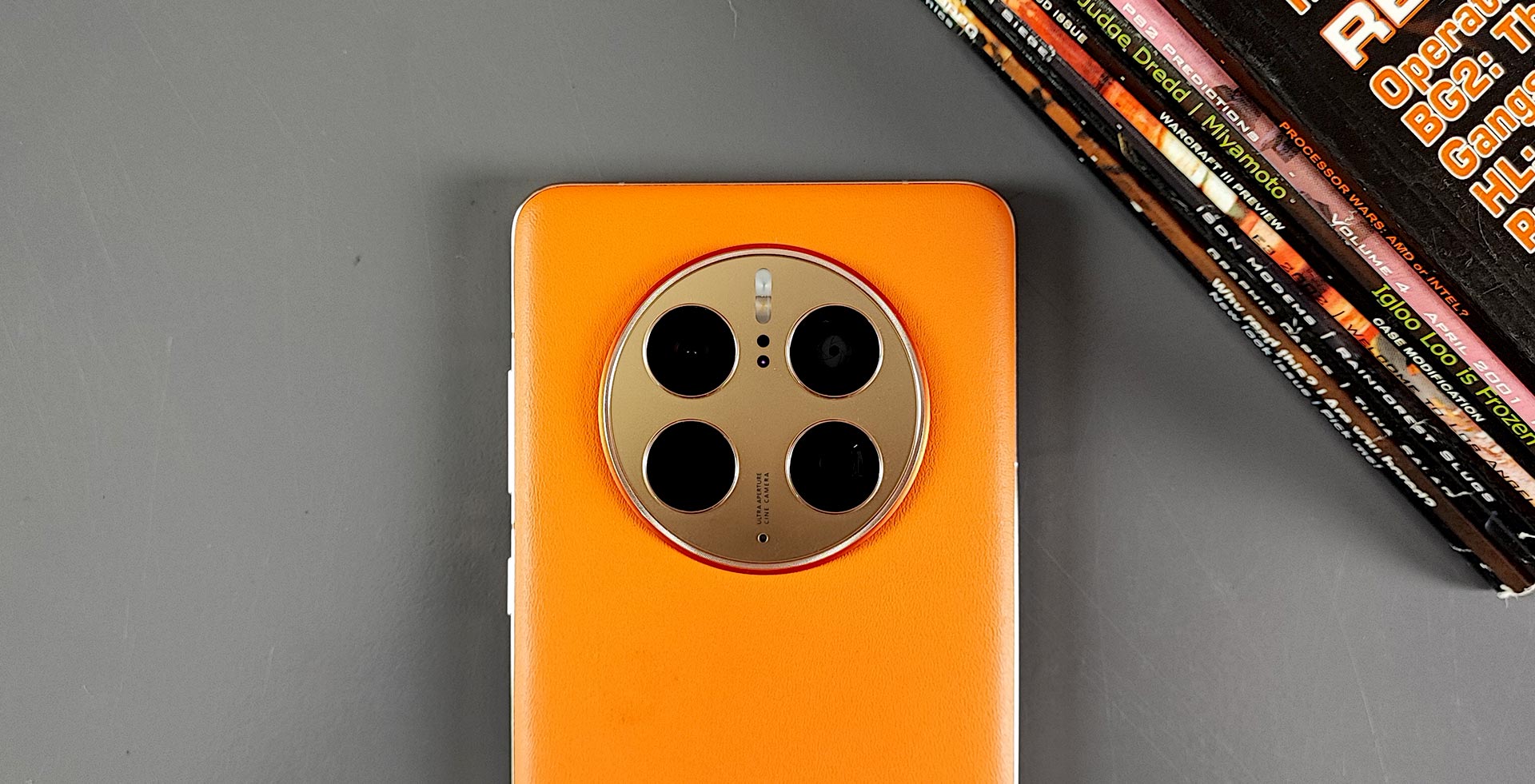
The Huawei Mate 50 Pro model I received for review is the beautiful orange, vegan leather version that is not just unique in colour but also is the only one in the range that comes with the new Kunlun glass, which is much stronger and more scratch resistant than anything before it. Even so, you still get a pre-fitted screen protected for extra protection. A phone cover is also included in the box, and while I usually want to protect my device, the vegan leather feels and looks good enough to dare go without it.
The camera cluster on the back of the phone comprises three cameras with very distinct lenses on each. There’s a 13mm ultrawide lens, a 90mm periscope telephoto lens, and a 24mm wide lens with a physical aperture and a 50-megapixel sensor. Yes, you read that right, there is a physical aperture on this phone, and it’s a game changer.

This physical aperture works just like that of a DSLR. It ranges from f1.4 to f4 at 24mm, which is pretty impressive. This feature will ensure that you get an excellent depth of field when taking photos of people or things. There are no digital bokeh filters required here. This physical aperture will let you create the real thing.
If you are a videographer, you’ll also appreciate this smartphone’s video capabilities. You can shoot at a maximum resolution of 4k at 30 or 60 frames per second for both the front and rear cameras. At 1080p, the rear camera can shoot as high as 480fps, while the selfie camera can shoot 1080p at an impressive 240fps. This means you can create really sharp video content straight on the phone, and we did just that. You can check out episode 9 of the NAG show. We shot most of the footage in that show with the Huawei Mate 50 Pro.
Looking at its operating system, the Huawei Mate 50 Pro runs on EMUI 13, which is based on Android 12 and feels familiar, as you’d expect. Using the Gbox emulator app, though, changes the experience entirely and lets you run most of the Google apps on this device. My most important apps are Gmail, Maps, Drive, and Photos, which all work perfectly fine.
Software aside, the Mate 50 Pro’s hardware is equally impressive. The Mate 50 Pro smartphone feels similar in hand to my old Mate 20 Pro, but it is slightly larger with a 6.74-inch display at a resolution of 1212×2616 and has a built-in fingerprint reader. While the screen is bright and vibrant, with a refresh rate of 120Hz, it feels buttery smooth.
There’s also plenty of power under the hood with the Qualcomm SM8475 Snapdragon 8+ Gen chipset, 512GB of storage, and 8GB of RAM which is by all accounts a mobile gaming killer.

So as per my usual routine, and using the ultimate judge of character and benchmark, PUBGM, I set off to Pochinki. I played many hours of PUBGM, and the gameplay felt super smooth; you’ll get 90fps of hot drop action with ease.
Even Call of Duty Mobile delivered 90fps and smooth gaming all around. It’s worth noting that 90fps is the maximum frame rate both games allow.
Our favourite synthetic benchmark, 3DMark, delivered a score of 2,719 on the Wildlife Extreme benchmark.
After 30 days with the Mate 50 Pro, I have rekindled my love for Huawei smartphones; this one is perfectly suited to the content creator who wants a device that can shoot great quality video and photos, and manage the editing. I still wait in the hope that Google Mobile Services will return to these devices, but for now, the emulator does a good enough job that I can once again recommend Huawei smartphones to those who love the look and feel of these devices.