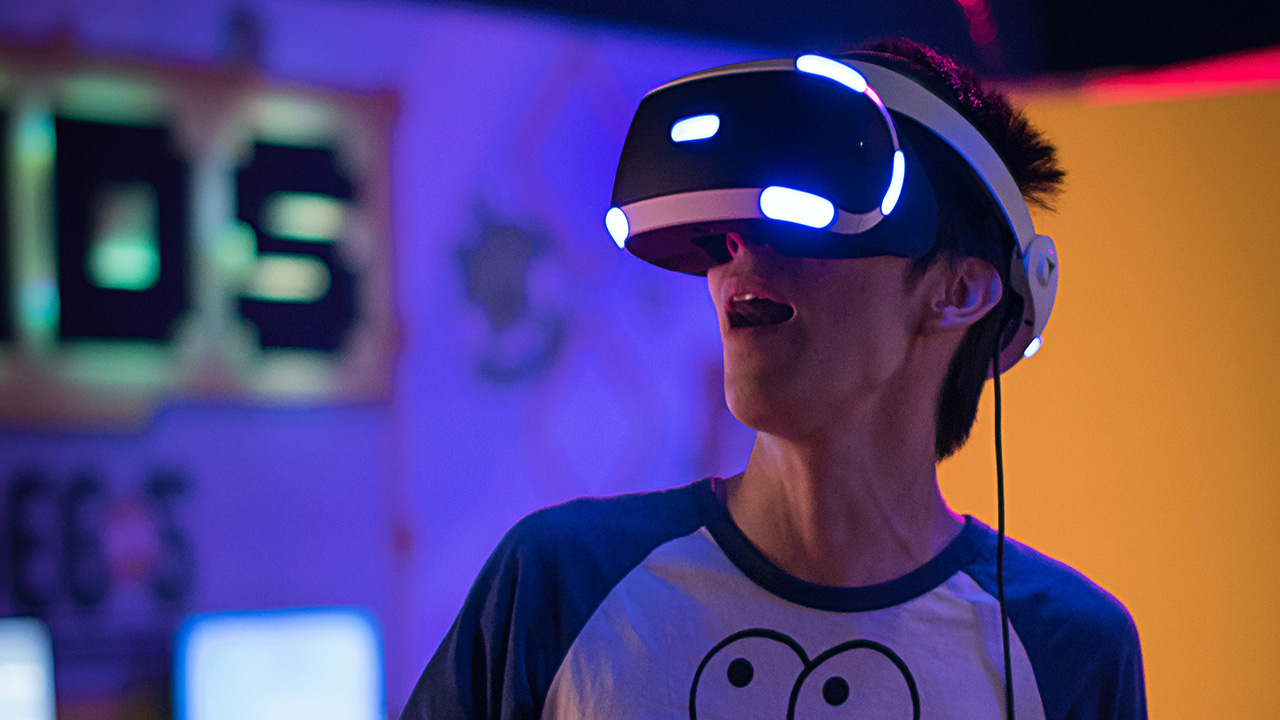
Over the past few weeks, the NAG team has been on the edge of their seats waiting for the Sony PlayStation VR 2 to arrive not only in South Africa but in the safety of our office. During this time, the conversation surrounding VR, in general, has been a hot topic.
One of the main points that kept coming up among the team was where one begins with VR? By this, we mean which systems are available in South Africa, how much they would cost roughly and what type of setup and space would they cost you need to run it optimally. Through having this conversation, we realised that if this is something we’re talking about, it’s more than likely something that would interest you, our beloved readers, as well.
With that in mind, we’ve put together this article, best described as a beginner’s guide to VR or even VR for dummies. In it, we go through the top VR headsets available in 2023, how much each would set you back, and give you some of the pros and cons of each system so that you can make the best choice for you.
What is VR, and how is it different from gaming on a computer monitor or a TV?

Okay, so I don’t need to explain what VR is to any of you here. Still, I’m also sure that everyone reading this knows at least one person in their lives who had no idea what VR is; in that case, this explanation is for them.
VR is short for virtual reality. Outside of the unrealistic expectations set by movies or anime, it allows regular people to experience a digital world in a closer and more immersive way. An effect like this is achieved by having people put on a head-mounted screen that uses tracking technology to track movement in the real world and transfer that to character movement in the game.
Players can use these hand and arm movements to control things in the virtual environment at its most basic level. Think about swinging your arms in real life to slash through cubes in the game – much like how Beat Saber operates. But then, some VR sets take tracking even further.
We’re living in 2023, which means there are now headsets that can track your eye movement or even systems that can tack when users walk run, duck or jump. This added level of interaction between what you choose to do in real life and what happens in the game that genuinely makes VR different from other kinds of gaming.
Sure, there is nothing wrong with using a controller to aim and shoot at zombies. Still, there is something so much more impressive about holding your hand out, aiming and pulling the trigger while dodging left and right to protect your brain.
Now that we know and understand what VR is, let’s talk about some of the best VR kits readily available:

Now for many wanting to pick up a VR system, one of the first considerations will be cost and the availability of games. However, over the last two or so years, VR has been growing and expanding rapidly, and there really isn’t such a big divide between any of the available systems anymore.
So now the choice comes down to convenience. Do you already spend all your time playing on your PlayStation? The PSVR or PSVR 2 is the obvious choice. Do you already have a super powerful gaming PC? Well, then, the QUEST 2 Valve Index kits are for you. But let’s take a more detailed look into the big seven:
HP Reverb G2

Okay, so I would never have looked twice at the HP Reverb a year ago. The only reason for this was how intertwined the system was with the Windows Mixed Reality platform. Microsoft’s Mixed Reality platform is dwindling at best. However, the HP Reverb G2 is finally Steam-friendly and worth a look.
I’m not sure it would make the cut if I had to pick between the HP Reverb G2 and the other devices on the list. At R16 000, it’s expensive, and for a system that requires you to be tethered to a gaming PC, it’s not all that wonderful.
I’ll give the HP Reverb G2 credit where it’s due, though, by saying that the 2,160 by 2,160 resolution per eye screen is pretty damn great, and the camera-based tracking doesn’t require you to set up a whole base station. However, cable management could be better, and the controllers and motion tracking don’t match its competitors. Also, the PC you need to run using Windows Mixed Reality or SteamVR is no joke.
The Good:
High resolution with sharp visuals
No need for external cameras
The Bad:
Windows Mixed Reality is dwindling at best, and there are better VR sets aimed at SteamVR
The motion-tracking and controllers just aren’t great
The Ugly:
It’s a wired mess
HTC Vive Pro 2

One of the more popular VR headsets is undoubtedly the HTC Vive Pro 2. It’s a semi-consumer VR headset that targets gamers and people wanting to use it more professionally. However, this is the VR set that is undeniably the most amount of hassle to set up and enjoy than any of the others on this list.
To start with, the headset will set you back a cool R27 000. However, this is only for the headset itself, and to use it, you will need to shell for the controller and base stations as well. The HTC Vive Pro 2 works with SteamVR, but it also comes with its own VR software store called Viveport.
Viveport users can also sign up for the subscription-based Viveport Infinity to access unlimited VR experiences instead of buying them each independently. To get the best possible experience out of the HTC Vive Pro 2 and to experience its 5K potential, you’ll need a PC with an Intel Core i5-4590 or AMD FX 8350 or better and an Nvidia GeForce RTX 2060 or AMD Radeon RX 5700 or better.
The Good:
It’s got one of the best displays around
It’s very comfortable
The Bad:
It’s tethered
So much hassle to setup
It doesn’t come with everything you need straight out of the box
The Ugly:
Its price
Valve Index VR kit

The Valve Index VR kit comes in at roughly R33 500; on paper, they’re not much better than any of the other VR headsets on this list. However, the Valve Index VR kit does have one thing that truly sets it apart from the competition: the controllers.
The Valve Index VR kit controllers can track, with precision, individual finger movements. While not many games take full advantage of this, the ones that do are made so much better by being able to wiggle each of our fingers independently.
The system was made to integrate with Valve’s SteamVR, and if you’re looking for a VR set specifically to use with your PC and Steam, this is the one for you. The jut comes with dual 1440 x 1600 LCDs, full RGB per pixel and an 80/90/120/144Hz framerate and the tracking is done using the SteamVR 2.0 sensors.
The Good:
Immersive, finger-tracking controllers
The high refresh rate gives buttery smooth in-game motion
SteamVR is a great resource filled with many VR experiences to enjoy
The Bad:
It’s costly, considering you still need a great PC to take advantage of it
The Ugly:
It’s tethered
Meta Quest 2

The Meta Quest 2, better known by its previous name, the Oculus Quest 2, is Facebook’s entry into the world of VR. Coming in at R13 000, the Meta Quest 2 is a standalone VR headset, meaning it doesn’t require a PC to use it. If you want to take advantage of any PC VR titles, you can buy an additional Link Cable. However, Meta has added official wireless streaming to the Meta devices.
Suppose you plan on using it to experience the Metaverse. In that case, it’s completely wireless. It is a VR device powered almost entirely by mobile components, specifically the Qualcomm Snapdragon 865 chipset. The Meta Quest 2 is a great entry-level VR set if you’re not all that focused on performance.
It boasts an 1832 x 1932 per eye resolution with a fast-switch LCD, and you don’t need any external cameras to use it. It’s one of those VR sets that just works, even if it won’t blow you away like some of the other VR kits on this list.
The Good:
It’s wireless
The display is nice and sharp
Allows for optional PC tethering
The Bad:
Compared to the other VR kits on this list, the specs are merely okay
The Ugly:
Two-hour battery life
Meta Quest Pro

Okay, so while the name Meta Quest Pro might not mean anything to you, the device’s previous title, the Oculus Quest Pro, should ring some bells. It’s the same device, just with a different name. Two main things set the Meta Quest Pro aside from the aforementioned Meta Quest 2 – first, price. The Meta Quest Pro will set you back a disgusting R47 300 and second, usage.
While the Meta Quest 2 is definitely aimed at gamers, the Meta Quest Pro is aimed towards people who plan to use the VR environment for collaboration and processing-heavy work. There’s much to love with the headset, from the 4k Display to the 1800×1920 per-eye resolution and 72/90 Hz refresh rate.
However, this VR headset requires five external cameras to be set up to work. Unless playing around with the eye, face, hand, and body tracking is vitally important to you, it’s hard to recommend dropping R47 300 on a VR system that requires this much work to set up and will only be able to run on the battery for an hour before needing to be charged.
The Good:
Improved design with a more comfortable fit than the Quest 2
Great eye and face tracking built-in
Wireless headset and controllers
It doesn’t require you to have a PC to use it
The Bad:
It’s expensive, so very expensive
Short battery life
The Ugly:
Requires five external cameras to be set up in the room
The metaverse is… fine… at best
Sony PlayStation VR

When the PlayStation VR first came out in 2016, I was convinced it was nothing more than a gimmick that would soon be forgotten. How wrong I was. When I eventually picked it up in 2020, I was ready to be disappointed by the ageing hardware. Instead, I was captivated; it was the gateway to my love for VR.
The PlayStation VR can be used with a PlayStation 4 or PlayStation 5, depending. All you need to have it work with the latest console is to request a free adapter from Sony for the camera, and yes, they shipped mine to me in South Africa with no questions asked.
While I don’t think the headset can hold up to the latest PlayStation VR 2, it still shines with its extensive library of VR games that aren’t backwards compatible with the new headset. The PlayStation VR has a 5.7-inch OLED panel with a display resolution of 1080p as well as nine positional LEDs on its surface for the PlayStation Camera to track 360-degree head movement.
Suppose you’re looking for a VR system that won’t break the bank at R4000, and provided you already have a PlayStation console, you won’t go wrong with the PlayStation VR, even if it is seven years old.
The Good:
Immersive VR experience
Low cost of entry compared with PC-based headsets
The Bad:
Requires PlayStation Camera and Move controllers
Slightly less powerful than its main competitors
The Ugly:
The single-camera tracking system relies on light tracking, which isn’t the best and results in some hiccups while playing
Sony PlayStation VR 2

The PlayStation VR 2 is such an impressive leap over the original PSVR; it’s mind-blowing. One of the biggest draws of this system is that it allows PlayStation 5 users to experience a PC-level VR performance without needing a high-end gaming PC.
Don’t get us wrong; at R13500, the PlayStation VR 2 is hardly cheap, but if you already have a PlayStation 5, it’s a no-brainer. Most entry-level gaming machines that won’t even give you a comparable VR experience will come in at about R20 000 without adding a VR headset.
The other draw to the PlayStation VR 2 is its easy picking and playing. Out of the box, all that’s required of you is to plug one USB-C cable into your PS5, and you’re good to go. There is no need for additional software, finding the perfect camera spot or worrying about performance-related issues. It just works.
The specs are also significant: an OLED display with a per-eye resolution of 2000 x 2040 and a refresh rate of 90Hz to 120Hz. There is also a six-axis motion sensing system (three-axis gyroscope, three-axis accelerometer) and an IR proximity sensor.
The headset comes with four embedded cameras for controller tracking. Also, it boasts impressive eye tracking and vibration feedback built into the headset.
The Good:
It’s a PC-grade VR machine
Great graphics and sound
Fantastic library of games that take full advantage of the tech
Eye-tracking
Easy to set up
No need for an external camera
The Bad:
It’s not compatible with the original PlayStation VR games at launch
It can only be used with a PlayStation 5
The Ugly:
It’s wired
—
It’s worth noting that we at NAG have yet to have the opportunity to thoroughly compare these VR kits against one another in a comprehensive way. But if this is something you would be interested in, let us know in the comments, and we’ll do our best to put some VR head-to-head content together soon.