“Apocalypse proof” that’s how one of my best friends likes to refer to board and card games. They are games that are solid forms of entertainment that aren’t reliant on things like electricity to enjoy, games you could take into a bunker during the apocalypse. And you know what, he isn’t wrong.
Last month, I, along with a vast majority of South Africans, found myself without power for most of the day, for days on end. And one of the ONLY things that kept me sane during this time was my collection of board and card games. Don’t get me wrong, my love for these games predates our electricity crisis and will (hopefully) outlast it too, but I digress.
After spending so much time playing deck-building card games, the thought of returning to regular video games when the power returned didn’t appeal. Although, all it took was one full day reunited with my PC again for love to return. But anyway, when my partner told me to try out a game on Xbox Game Pass called “Slay the Spire, ” which was supposedly just like the card games I had been playing, just digital, I jumped.

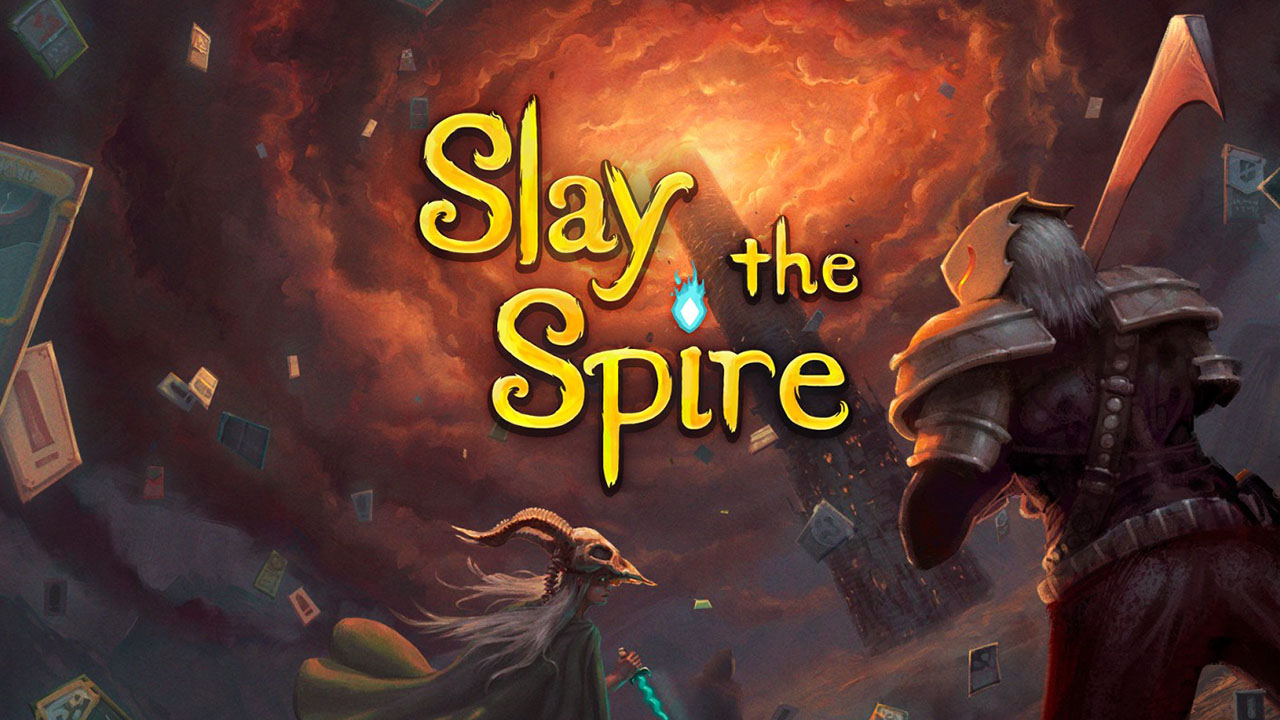
Slay the Spire is essentially a turn-based deckbuilding game that presents you with a tower you need to ascend, monsters you need to kill to climb, and roughly 300 cards that allow you to do the above. However, unlike a game like Hearthstone, in Slay the Spire, the monsters don’t fight with their own cards; instead, they fight more like Pokémon.
Each round will see the monsters inflicting damage, applying status effects, or buffing themselves. And you will respond to their actions by linking cards together to create a domino effect of damage and ultimately win. However, Slay the Spire is also a procedurally generated roguelike game and has all the choices that come with that.
One of my favourite parts of the game comes down to its balancing mixed with the game’s randomization. Not only do you have to focus on winning the card aspect of the game, but you also have to consider each path taken, each reward chosen, and each card picked up. All these choices will either lead to your victory or your demise.

Playing Slay the Spire never felt like a memory game of which card is the strongest or which combo is best. Instead, it felt like an ever-evolving system that required me to constantly be rebuilding by deck, changing my playstyle and rethinking my card choices.
The biggest downfalls Slay the Spire has is its art and animation. I mean, both are fine, but neither are great. I think the entire experience would only have been elevated by more attention being shown in both those areas.
If you enjoy card games but are tired of having too nag people to play with you, I’d suggest giving Slay the Spire a try. While it’s not a style of game that’s going to appeal to everyone, if it does appeal to you, it’s bound to become a favourite before you know what happened.