
How do game developers populate an enormous open world with unique architecture that isn’t obviously a series of copy-pasted assets? By using lots of copy-pasted assets in different configurations, duh.
Over on ArtStation, Assassin’s Creed Valhalla 3D artist and modular system designer Olivier Carignan shows how the team constructed the in-game Saxon church models, choosing from a selection of “about 400” wall sections, roofs, windows, and other elements.
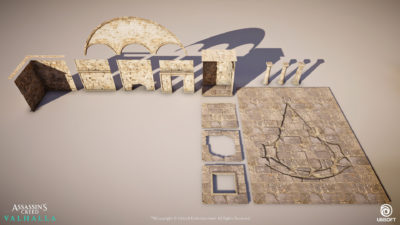
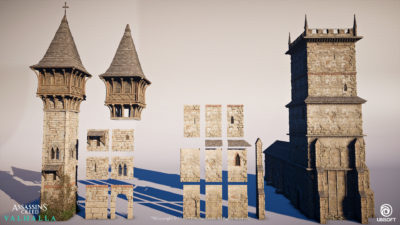
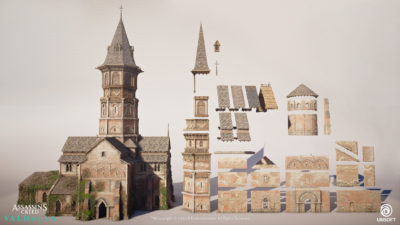
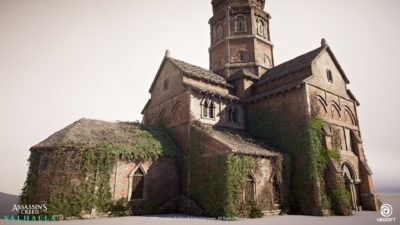
“I worked closely with Testurers Alfredo Cristinziano and Pierre-Alexandre Côté, Art Director Raphael Lacoste and Assistant Art Director Melanie Tremblay,” he explains, “but please keep in mind that the end result is a collaborative effort made hundreds of talents working at Ubisoft.”
It’s a fascinating exposition of the frequently opaque design process for video games, and a reminder that it’s not a case of just pressing a button to generate geography and props. Assassin’s Creed Valhalla is an extraordinary example of this, featuring an aesthetically diverse open world that seldom feels been-there, done-that, got-the-commemorative-fox-fringed-jerkin. The other night, for example, I stopped to gawk at a tree that was almost completely enveloped with some kind of ivy, unlike the others surrounding it. What? I love ivy, okay. I have a tree in my garden that’s getting there, so this was like #treegoals, yo.