
So much of what System Shock pioneered has become the standard in gaming that it’s hard not to spot its influence even today – and yet the game didn’t get anywhere near the attention and commercial success it deserved when it originally launched. To the developers of the game, that must feel like a bit of a retroactive kick in the nuts.

What made it so special? Immersion, that’s what. Most games at the time (circa 1994) were using the emerging technology of CD-ROMs to cut-scene us to death with shitty first-generation CGI or laughable FMV, intermittently dumping us in the game world to fight our way to the next bit of cut-scene. In System Shock, however, the game was the story. It was all around you and you had to pay attention to it if you wanted to progress.
The premise is that you’re a hacker who accepts a shady deal from a corporate bigwig in return for a military-grade bionic hacking interface. You hack him into the controlling computer of Citadel Station (which is in orbit around Saturn), and then take a six-month nap while your shiny new neural implants heal. When you awake, the station is in ruins, almost everyone is dead, and the controlling computer, SHODAN, is tearing shit up with her army of mutant cyborg monsters. What the hell happened?
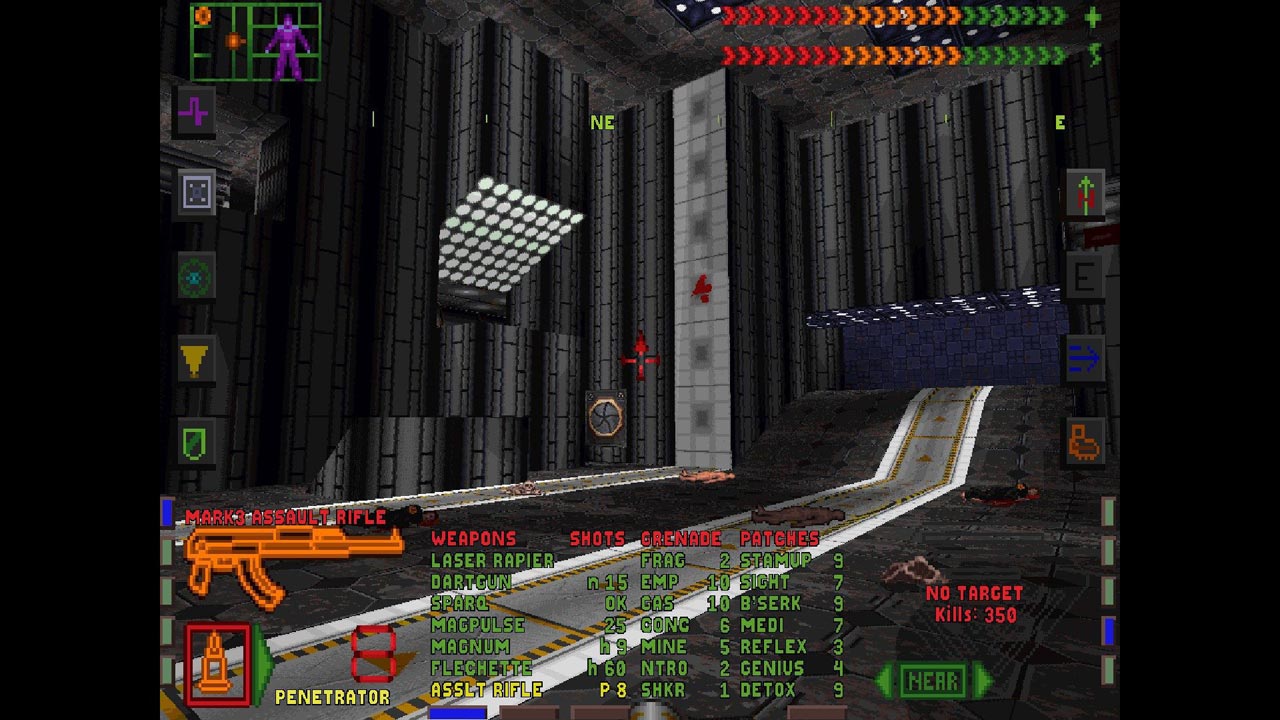
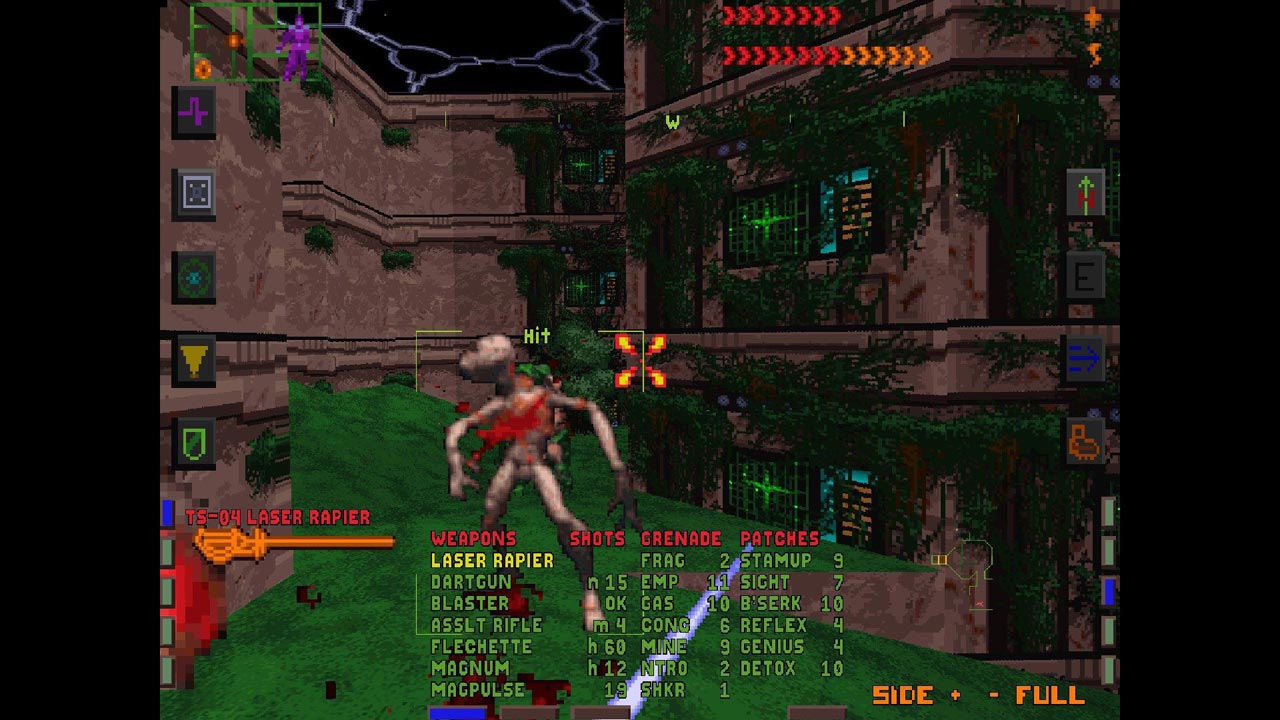
Finding the answer to that is the goal of the game. Well, actually, stopping SHODAN is the goal, but you can’t do that without finding out what she’s doing and how to stop her. If you ever play a modern game where you constantly pick up fragments of audio messages filling you in on bits of background story, or walk into a room where the furniture, items and corpses are laid out for you to interpret forensically, or are constantly taunted by the villain – it’s taking a cue from System Shock. System Shock doesn’t hold your hand with arrows showing you where to go, or diary entries to remind you of door codes and objectives. You have to find your way around Citadel Station yourself, often by listening to directions – and of course, it would be swell if you didn’t die while you were at it.
Luckily there are all kinds of different weapons and cybernetic enhancements you can find to help you survive against the hordes of monsters in your way. In System Shock, it’s mostly a case of using the right weapon, loaded with the right kind of ammo, against the right enemy. Exploring every nook and cranny for weapons, ammo, support items and bits of story is also a huge part of it.

The GOG.com package is an enhanced edition which runs on modern PCs without issues, offers a widescreen setting and even provides a new, modernised mouselook interface to replace the clunky old control scheme. There’s a bit of an issue in that there’s no easily accessible option to invert the Y-axis of this new control scheme, but I found a way and made a YouTube video showing you how (and explaining a bit of the game’s mechanics) if you want to check it out.
- A truly historical game that laid the groundwork for many modern tropes
- The story is especially gripping because you have to dig for it yourself
- Lots of weapons to find and tons of bad guys to use them on
- New mouselook interface makes the game friendlier to modern gamers
- A labyrinthine space station to explore full of loot and secrets
- Despite the new mouselook mod, the interface is still kinda clunky
- Lacks hotkeys for some modern things, like selecting (or throwing) grenades and healing
- As good as it is, some may still be turned off by the blocky, ’90s shooter visuals