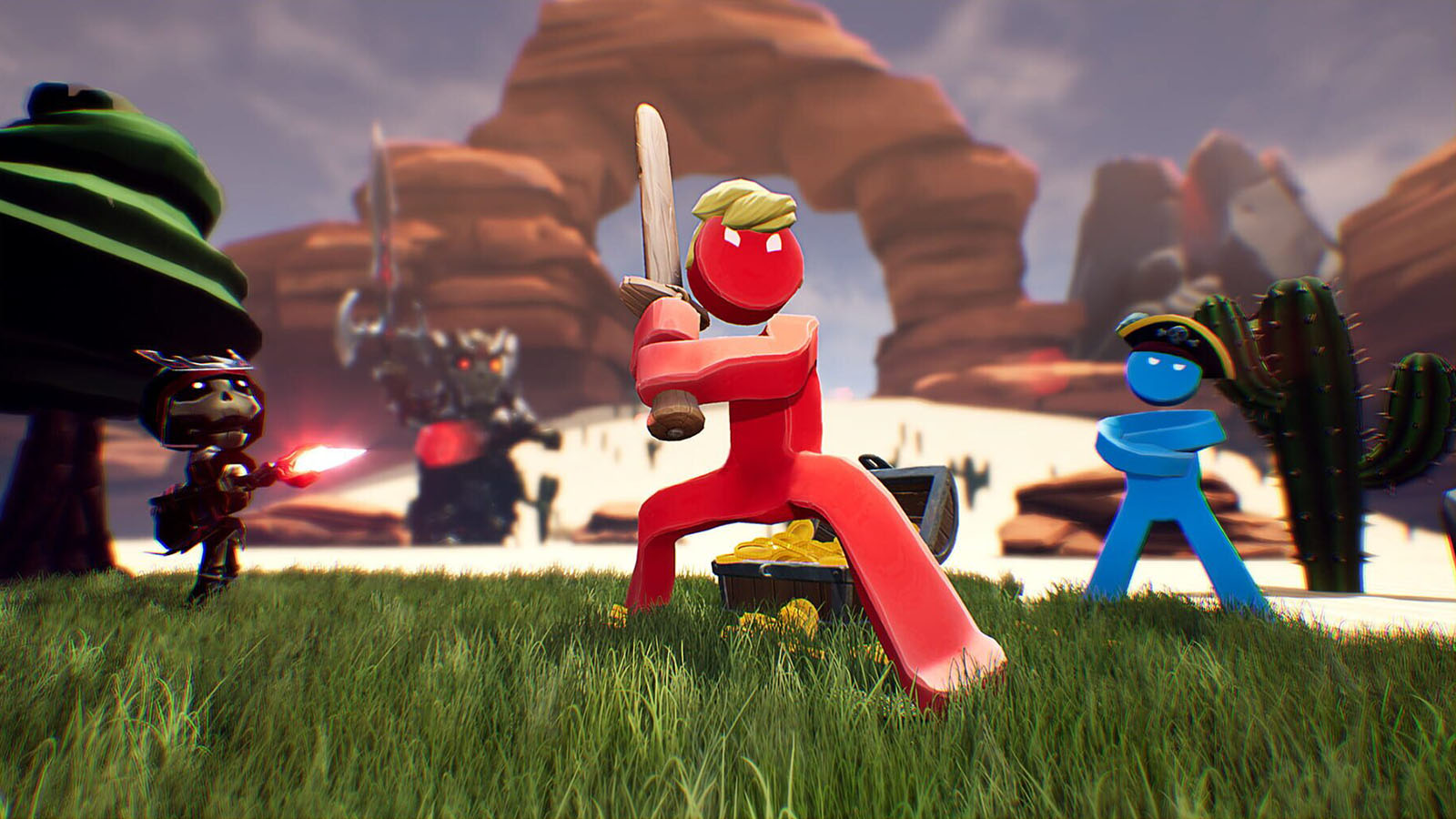
In the vast cosmos of gaming, where the word sandbox games usually translates to epic open-world experiences, Supraland flips the script.
In Supraland, the word sandbox couldn’t be more literal; players control a tiny plastic figure in a kid’s backyard sandbox. Imagine Honey, I Shrunk the Kids meets The Legend of Zelda, with a sprinkle of Portal puzzling thrown in for good measure.
Originally launched on PC in 2019, Supraland has since parkoured its way onto consoles, bringing its charm, puzzles, and occasional ‘did I just outsmart myself?’ moments along for the ride.
Developed almost single-handedly by David Münnich, Supraland proves that sometimes one person’s wild idea can go toe-to-toe with the industry titans.
In Supraland, you’re the prince of the Red Kingdom, a tribe of thumb-sized plastic people in a bitter feud with the neighbouring Blue Kingdom. The stakes? Someone’s been messing with the water supply.
Naturally, this calls for a hero to trek across the sandbox, face untold perils, and figure out how to unlock that one chest you keep forgetting about.
To your pint-sized protagonist, the backyard is a sprawling epic. A garden hose becomes a mighty river, and a Lego brick transforms into an unscalable wall until you unlock the right ability.

Everyday objects are repurposed into environmental puzzles, and the world feels alive. The game is a Metroidvania at heart, with a sprinkling of RPG mechanics and plenty of puzzles to solve.
Speaking of puzzles, they’re the real MVPs here. Each new ability, like spawning a gravity-defying purple cube, opens up fresh ways to interact with the world. Basically, Supraland takes all of the mechanical staples that players can expect from double jumps to combat and breaks it down, making you earn each one as you play.
The gameplay loop is thrilling, and I never thought something as simple as unlocking skills that you usually start with in other games could feel so rewarding. But while Supraland is a delight, it’s not without its downfalls.

While each ability feels earned, transforming the world and how you interact with it, the combat is only serviceable. The real stars are the clever puzzles and the imaginative world design. The game’s simple aesthetic also hides its resource-heavy nature, and despite what you may think visually, this isn’t the type of game that’s going to run smoothly on a low-end PC or laptop.
However, despite all this, the game reminds us that you don’t need hyper-realistic graphics or a blockbuster budget to create something special. Its mix of puzzles, exploration, and cheeky humour makes it a standout title despite its occasional stumbles.