Bloomtown: A Different Story had me hooked from the moment I first stumbled across its trailer. A monster-taming, dungeon-crawling RPG with cosy vibes and a mystery-laden plot? Yes, chef, I will absolutely have what you’re serving. So when December rolled around, I fired up my Steam Deck, donned my metaphorical adventurer’s hat, and dove in.
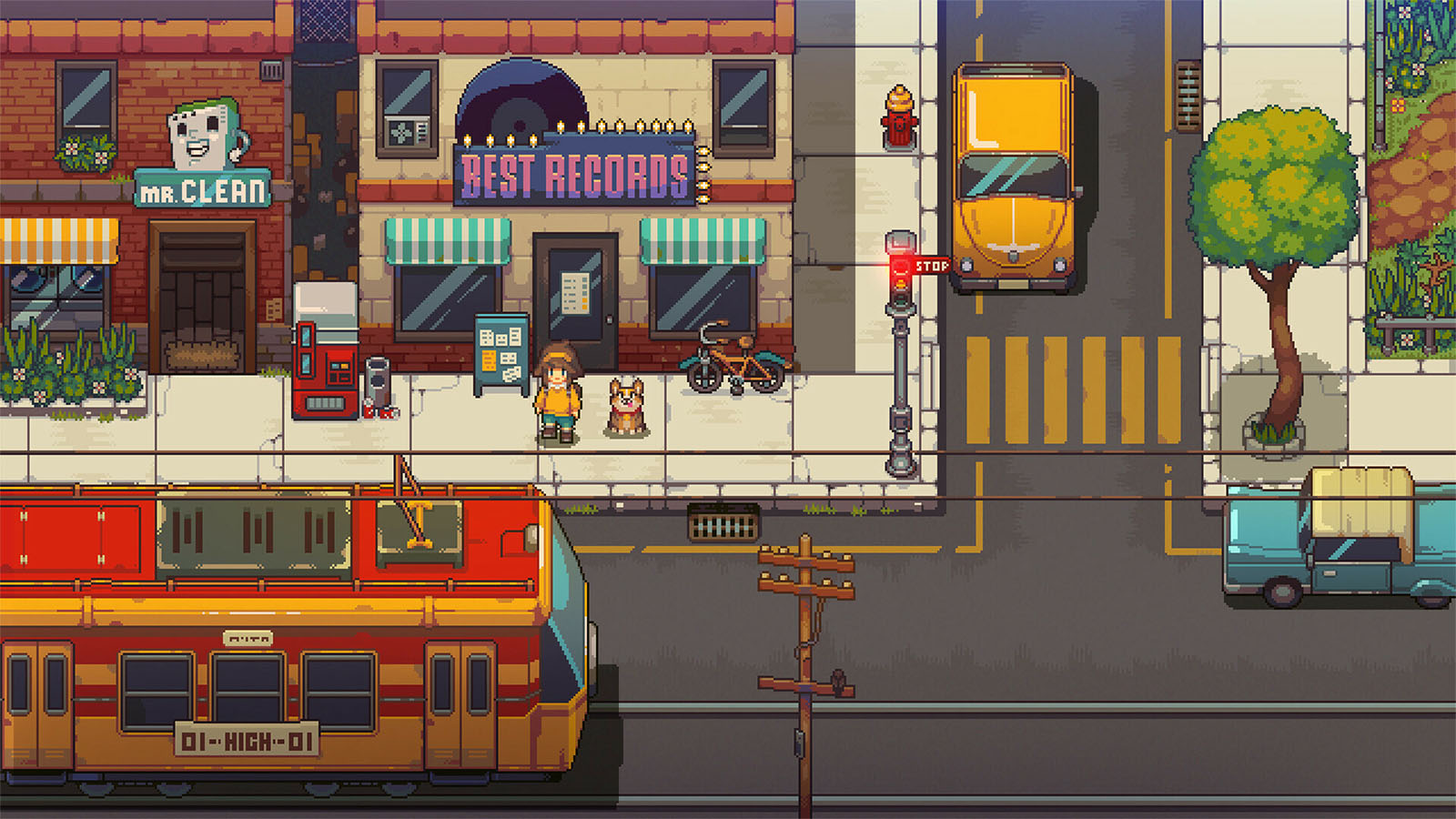
On paper, Bloomtown ticks all the boxes of an Arielle™-certified good time. A dark yet colourful world that feels like Gravity Falls’ moodier cousin? Check. Gorgeous pixel art that practically begs you to screenshot every frame? Double-check. Genuinely funny dialogue and pop-culture nods sprinkled throughout? You better believe it.
But, much like eagerly unwrapping a beautifully packaged gift only to find a pair of grey socks inside, Bloomtown struggles to deliver on its initial promise. The opening hours are strong, but the spark dims, the pacing slows to a crawl somewhere along the way, and I started to feel trapped in an eternal twilight zone.
You play as Emily, a city kid who heads to the suburbs with her brother Chester to spend the summer with their grandpa Cooper. It’s all very wholesome—helping grandpa in the garden, working shifts at the general store, vibing to some lo-fi pixel beats—until a local girl goes missing and Lucifer himself slides into your DMs (okay, okay, he summons you in a spooky nighttime encounter, but tell me that isn’t peak chaotic energy).

This isn’t just another cosy life-sim. Bloomtown is actually a monster-taming RPG with dungeon-crawling sprinkled in for good measure. The small-town charm quickly gives way to shadowy underworlds, spooky monsters, and a mystery that feels one part Stranger Things, one part Persona, and one part… well, Bloomtown.
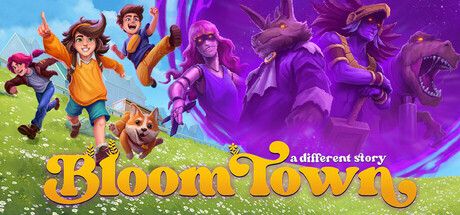
To face the dangers of Gloomtown, yes, that’s what the dark mirror version of the town is called, Emily teams up with Chester, Ramona and Hugo, a talking corgi who is both adorable and somehow better at combat than half my party in Baldur’s Gate 3.
But here’s the thing: Bloomtown isn’t content with being one type of game. No, it throws in Pokémon-style monster battles, Stardew Valley-esque farming, and even Baldur’s Gate 3-inspired dice roll checks. On paper, that’s a dream combo—but in practice, it’s like trying to juggle swords, flaming torches, and a live chicken. Eventually, something’s going to drop.

The monster-taming mechanics, while serviceable, lack the polish and balance you’d expect from a system so clearly inspired by Pokémon. Battles start out engaging, but before long, I found myself spamming the same two spells on repeat, autopiloting my way through enemy encounters.
Then there are the cosy mechanics—gardening, crafting, and other slice-of-life activities. Stardew Valley, this is not. The systems feel clunky, slow, and ultimately pointless when the rewards you gain from them can be acquired elsewhere with far less effort. If it feels rewarding, I’m all for planting digital carrots, but Bloomtown made me feel like I was pulling weeds in real-time.
And don’t get me started on the dice rolls. In theory, they’re a fun way to add a bit of tabletop RPG randomness to the mix. In practice, they feel about as reliable as trying to land a critical hit while blindfolded. I failed dice rolls with a 97% success chance so frequently that I started to wonder if the dice were gaslighting me. Meanwhile, my partner, rolling with a measly 10% chance, passed every single time.

The thing is, all these mechanics individually had the potential to shine. They just never quite gelled together into something cohesive. Instead of evolving into the grand adventure I’d hoped for, Bloomtown felt like it was perpetually stuck in its introduction phase, brimming with promise but never delivering on it.
That said, it’s not all doom and gloom in Gloomtown. The humour genuinely lands, the art direction is stellar, and the vibes are immaculate—at least for the first few hours. But when those hours stretched into an eternity of repetitive battles, awkward farming, and dice rolls that clearly hate me, saying goodbye to Bloomtown wasn’t just easy—it was a relief.
Ultimately, Bloomtown: A Different Story feels like an ambitious dish made from all your favourite ingredients but with the oven set to the wrong temperature. It’s tasty in small bites but ultimately leaves you unsatisfied. If you’re someone who can overlook clunky systems and uneven pacing for charm, humour, and pixelated aesthetic excellence, you might still find something to love here. But for me, Bloomtown is less ‘A Different Story’ and more ‘A Missed Opportunity.’

Why Handheld? I played through the entire game on my Steam Deck, and honestly, that’s the only way I recommend playing it. Lying on the couch with a TV Show on in the background as a distraction is the best way for this game to shine – albeit only for a while.