Smart wearables have been around for years, and while some have tried and failed, like Google Glass, the most successful of the lot seems to be smartwatches. A device that you would generally wear on a normal day-to-day basis anyway.
The thing with a smartwatch is that it’s quite a big piece of tech, and if we’re looking to monitor how our days are going to turn out, we should monitor how we’re sleeping. A big watch on your wrist might not be as comfortable as, say, a much smaller ring on your finger.
Smart rings are the new wearables that are popping up in the market, and we were lucky enough to snag one to let you know what it can really do.
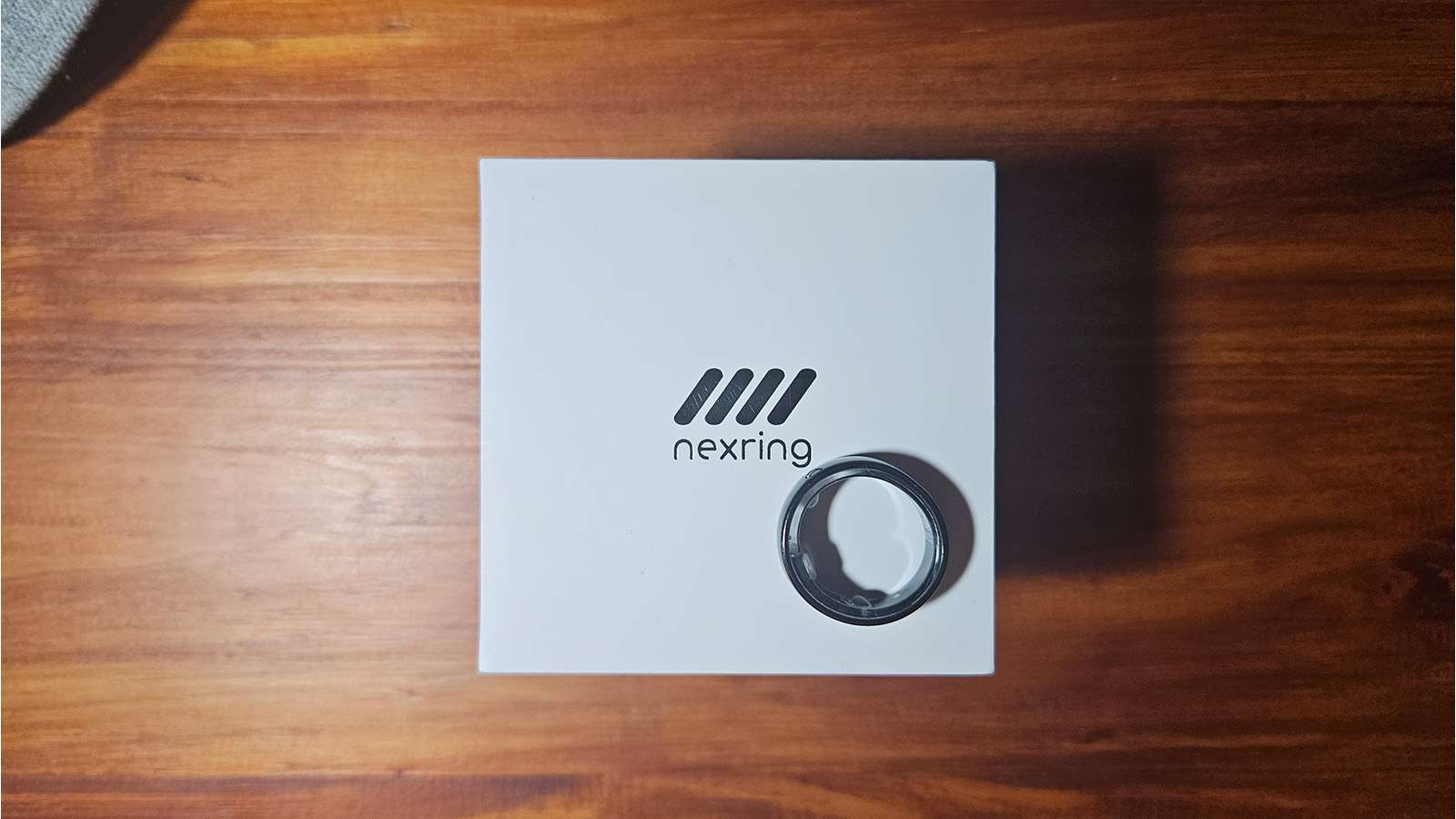
The NexRing by Linktop is the exact device we got to play with, and I, for one, have, at the very least, learnt that my fingers get fatter as the day goes on.
Now, I’ve worn a good couple of smartwatches in the past. They essentially tracked everything I did during the day, like my steps, my daily heart rate, and if I was able to get up off of the couch and do some exercise. While the NexRing does offer very similar tracking, its approach focuses more on your sleep and how “ready” you are to tackle the day.
 At first, it was a little bit weird to get used to the device because I was constantly logging in to the app to see how I was doing, and while it did show me my daily heart rate and step goal, the real information only comes to you after you have a good, or bad, nights rest.
The ring tracks a good couple of metrics while you sleep and, in the morning, gives you both a sleep score and a readiness score, which is how well-rested your body is to take on the day.
The sleep score is calculated with the following metrics in mind:
- Total Sleep
- Quality Sleep
- Heart Rate Dip
- Deep Sleep
The total sleep is how long you’ve been asleep for. The quality sleep metric takes into account how much tossing and turning you’ve done and calculates how much time you’ve spent getting good, quality sleep. Heart Rate Dip tracks how much lower your heart rate is while you sleep relative to the past 24 hours of awake time, and Deep Sleep is how long your body spends in its deepest sleep.
While you’re asleep, the ring is also tracking a few other metrics that it then uses in combination with your sleep score to give you what it calls a readiness score. HRV or heart rate variability and finger temperature are these two metrics.
The ring also calculates your SpO2 (or how much blood is in your oxygen) and your respiratory rate; however, these are just general health metrics and aren’t used in calculating any of your “scores”.

Here’s a quick overview of some of the metrics that you get out of the app and why they matter, just to get a better understanding of what the NexRing does:
Heart Rate Dip:
The NexRing will measure your heart rate while you sleep and compare it to your non-active heart rate during the day. Studies show that a 10% dip in your sleeping heart rate shows signs of a good, restful sleep.
Heart Rate Variability (HRV):
HRV reveals how your body responds to training and stress. Factors like age, health and fitness can affect your HRV. Generally speaking, a higher HRV depicts generally good health, around 120ms. A lower HRV can show high levels of stress from overtraining.
Finger Temperature:
Tracking variations in your nightly temperature can show if you are becoming ill before you start to feel the symptoms. A sudden rise in temperature picked up by the NexRing suggests you should take your temperature with a standard thermometer to confirm. Menstrual cycles will also increase and decrease your body temperature; this metric can help show how far along your cycle you are.
Quality Sleep:
The quality sleep metric takes into account how restless you have been during your rest. The less restless you are, the better quality of sleep you receive and the better you will feel the next day.
SpO2:
SpO2 levels indicate how much oxygen you have in your blood. Allergies, bad sleeping environments and oncoming illnesses will lower your blood percentage, and tracking it will assist in early detection or show you that you need to adjust your sleeping environment.
Respiratory Rate:
Your respiratory rate is how many breaths you take per minute. While sleeping, a typically healthy person will breathe between 12 and 20 times per minute. Of course, these numbers vary, and it’s more helpful to make sure that your respiratory rate remains stable over the long term, so tracking this metric can be quite useful.

After wearing it for about a week, here’s what I like and what I don’t. First, the ring is made from titanium, so it is super lightweight, and I almost forgot about it on my finger. I went for the NexRing that matches my normal ring size, and it can, at times, feel a little bit tight, but one ring size up felt a little too loose. I’d have gone for a half-size-up if it was available, but I prefer the tighter fit to the loose one. That being said, the ring could still accurately measure everything when I moved it to my pinky finger, so a looser fit wouldn’t hinder what the ring needs to do.
I did enjoy that the ring was a fire-and-forget type of device. I wore it, and that was pretty much all I needed to do. The app does have an option to start a workout, so the ring knows that you have done one and aren’t just suddenly under an immense amount of stress for no reason. The drawback is that this is a manual procedure that must be started before you work out. I know this is how things are done, but I would’ve preferred the ability to go back to the app after a workout to mark out the times that I was exercising that day. The other downside to the exercise portion is that you can only choose running or walking – and for good reason. I partake in CrossFit, and wearing a titanium ring doesn’t really work well with that type of exercise. I did try a couple of workouts with the ring on, but I would suggest you stick to exercise that doesn’t need your hands as much, like running or walking.

Even though I was removing the ring during my morning workouts, I could pick up a trend in my declining readiness every day. My sleep score remained pretty much the same, but the ring was able to identify that I was slowly getting increasingly tired as the week went on, and I was easily able to realise that I needed to take a rest day from gym.
This same kind of thinking works for other health-related worries, like stress and burnout. The NexRing will be able to pick up differences and tell you that you’re feeling tired today because of what happened the day before. If you had to think back to what happened, you might remember that there was a meeting with an important customer that perhaps didn’t go according to plan. Instead of just pushing through the tiredness with an energy drink and five coffees, you’ll know that maybe ten minutes of mindful thinking may be better suited to helping you recover.
The specifications indicate that the battery will last between four and seven days. During my time with the NexRing so far, I am sitting closer to the four-day mark. Fortunately, it charges back up in just under two hours, and since I wasn’t wearing it while at the gym, I found that that was the perfect time to pop it onto its pedestal.
I would also have liked to see the data in the app be more easily transferable to the other health apps I have on my mobile or perhaps have the option to export the data into a PDF or something I could send to my doctor. However, the NexRing itself is still a new device and over the week, the app did have two updates that saw some pretty generous improvements to how the data was displayed. So, I am hopeful.
The NexRing doesn’t come cheap and is priced comparable to an entry-level smartwatch. Looking at an Apple Watch, Garming Venu, the Huawei GT Watch or the Samsung Watch, the NexRing ‘s price, at around R5,000 doesn’t seem too out of place, and for the data and insights that it provided, I felt that it was device worthy of the price. You can get the NexRing in Black or Silver, and we were told that a limited edition Rose Gold version will be available before Christmas.
At the end of the week, I was quite happy with the data the NexRing gave me and how close it related to how I physically felt. I’ll likely keep wearing it long-term to see how the app improves and to see what kind of data I can get out of the ring. In my professional and non-professional medical opinion, I give the NexRing a thumbs up… with a ring on it.
NexRingSA is giving NAG readers R1,000 off the price of the NexRing. Simply use the code NAG2023 on checkout at www.nexringsa.co.za for the discount.