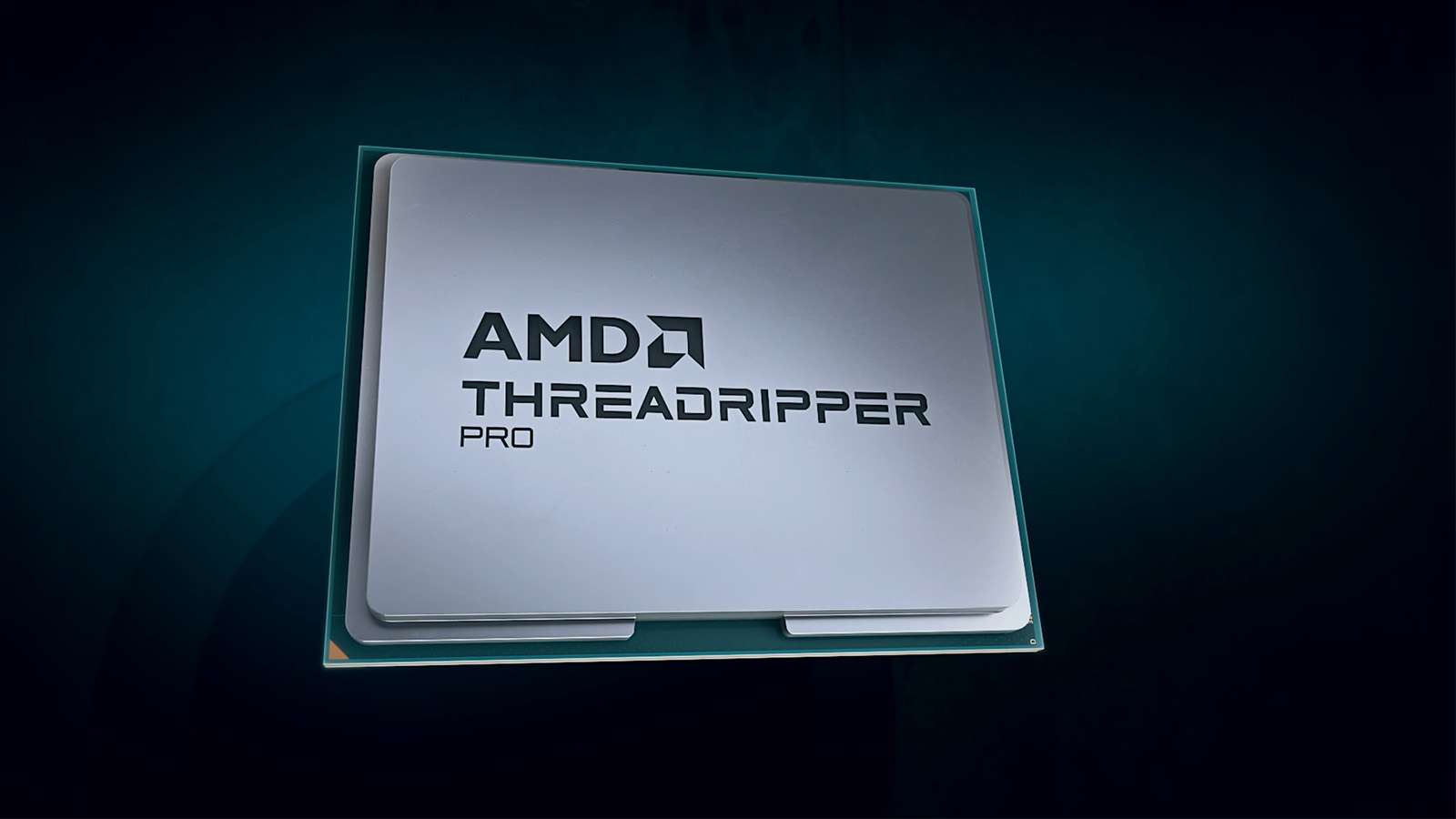
Last week AMD announced the next generation of Threadripper and Threadripper PRO 7000 series processors, bringing back the high-end desktop we last saw in 2020 with the Threadripper 3000.
The new Zen 4-based CPUs extend AMD’s lead in the workstation and HEDT space via two platforms, catering to IT professionals and high-end desktop users.
AMD claims the “Zen 4-based Threadripper and Threadripper PRO 7000 processors offer the most computing power possible for workstations and on the enthusiast desktop. Depending on the SKU, Threadripper processors provide anywhere between 48 to 128 PCIe 5.0 lanes for what AMD claims to be unprecedented performance and efficiency. AMD has designed the Threadripper PRO CPU for complex simulations, generative design, rendering, and software compilation tasks, where users are said to see up to two times faster performance in applications such as Chaos V-Ray.

For the HEDT customers, Threadripper and Threadripper Pro bring new levels of performance presently unattainable by current Intel and AMD solutions. This is particularly true for the competition, whose latest W-3000 Processors and platform could not match AMD’s current Threadripper 5000 series in total cost of ownership (TOC), power consumption, and performance.
AMD, with Threadripper and Threadripper PRO 7000, looks to further increase its lead with CPUs that bring with them sizeable IPC gains, better performance per watt, expanded IO and scalability that isn’t available anywhere else. To that end, AMD has introduced two platforms in the WRX90 for the PRO model CPUs and TRX50 for the HEDT, which supports both PRO and non-PRO CPUs. AMD has illustrated the differences between these two platforms in the table below.

What is likely to be of interest to you is the TRX50 HEDT platform, whose barrier to entry is a lot lower when compared to WRX90. Both platforms still require registered DDR5 DIMMs (RDIMMs), but the TRX50 platform supports memory and CPU overclocking out of the box. However, this is true for the WRX90 to a lesser extent, as OEM systems are said not to include any support for overclocking.
The CPU support on the TRX50 platform is also more flexible, as it allows users a more cost-effective entry to the ecosystem. Allowing users to scale their processing needs from the entry-level 24-core, 48-thread Threadripper all the way to the 96 Core 192, thread 7995WX Threadripper PRO model.
Where Threadripper clocks are concerned, they are the highest they’ve been, with models offering peak clock frequencies of 5.3GHz for the 32 core parts and lower, and 5.1GHz for the 64 and 96 core parts. Single-threaded or lightly-threaded parts would see a substantial performance gain over the current Threadripper PRO 5000 models, even if the underlying architecture were the same. Because of the newer TSMC 5nm process, AMD can increase clock frequency by up to 800MHz, depending on the model. Base clock frequencies have also increased but by more modest numbers, anywhere between 400MHz and 500MHz.

Finally, AMD has revealed that while both platforms require RDIMMs for operation, the PRO platform supports eight memory channels, and since we are talking about DDR5 RDIMM, that’s effectively 16 32-bit memory channels. This should offer substantial memory bandwidth advantages over the previous Threadripper generations. For the TRX50 platform, only 4 channels of memory are supported. Still, the DDR5 memory standard should see this solution provide more bandwidth than previous DDR4-based models, even those with more memory channels.
The one aspect of the Threadripper and Threadripper PRO 7000 series that may pose some challenges is the TDP, which has increased from 280W in the previous generation to 350 Watts. Depending on the environment, cooling adjustments may have to be made. AMD has yet to reveal a cooler compatibility list, but it would not come as a surprise if PC cooling technology vendors announced new products specifically for the socket in the time leading to retail availability.

Pricing in South Africa is unknown at present, but looking at the US dollar MSRP, the entry-level AMD Threadripper 7960X could start anywhere from R38,000, with the range-topping 64-core Threadripper 7980X at a whopping R100,000 or more using. Not cheap by any means, but for the target segment, the pricing should be well worth it for the increased productivity these CPUs deliver.
How well these CPUs will perform in the real world, outside of AMD’s own performance figures, is still unknown, but we will be doing our own testing and performance analysis soon, so stay tuned for our full AMD Threadripper 7000 coverage in the next few weeks.