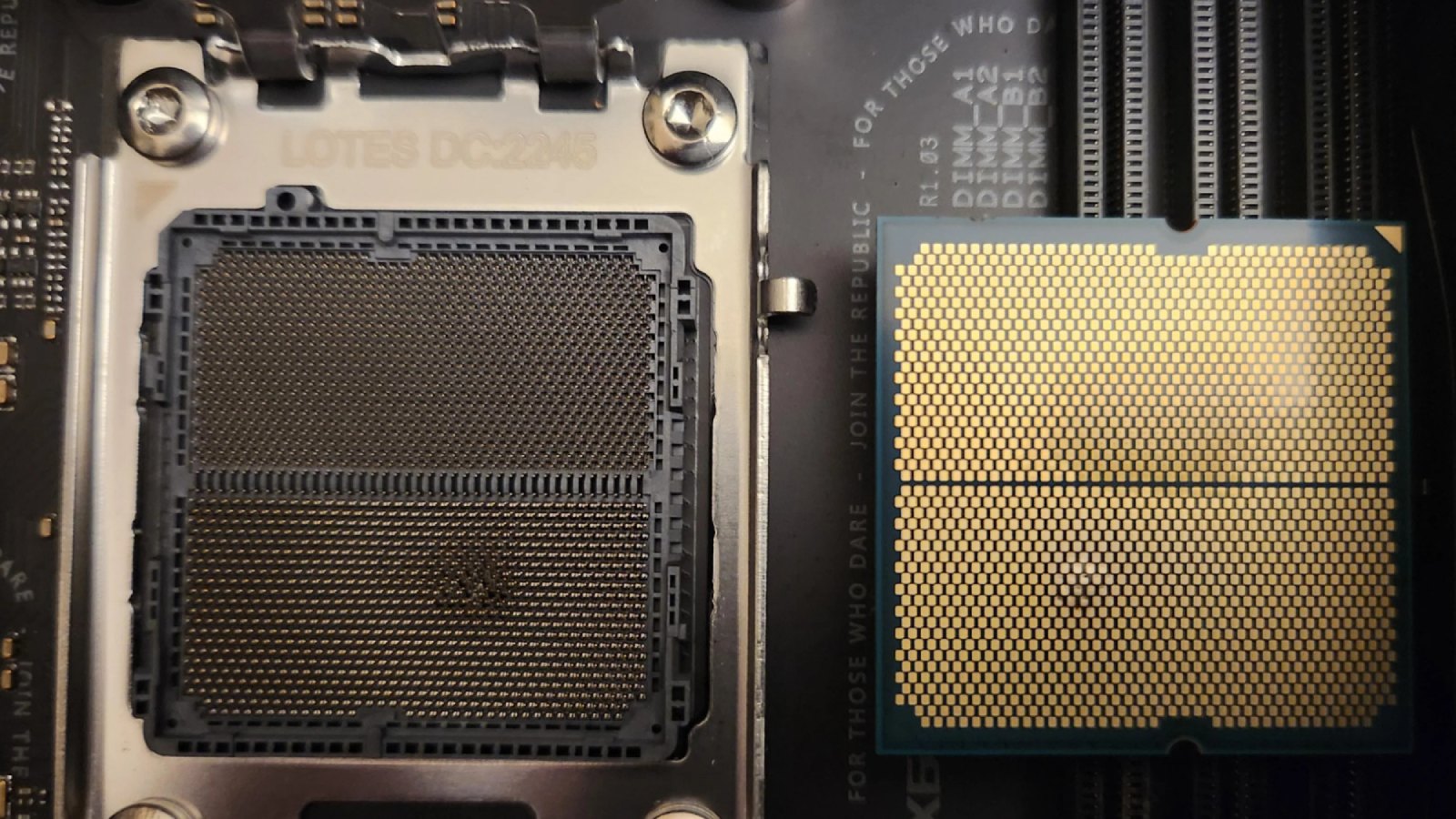
If you haven’t been keeping your eyes on all things overclocked, you might not have seen the AMD Ryzen 7000 debacle, and how AM5 Motherboards are delivering unstable SOC voltages to these chips. To catch you up, in an attempt to keep you warm for the winter, it was picked up a couple of weeks ago that Ryzen 7000 and 7000 X3D chips were burning out, causing damage to both the CPU and the motherboard in the process. That is not great news, let’s be honest. If you’re buying these higher-end products, you’re probably not expecting them to start smoking up your computer case, at least not with that kind of price tag.
AMD was quick to pick up on the issues being reported and sent out a press release stating that they were working to find the problem causing the burnouts on the Ryzen 7000 and 7000 X3D chips. Initially, it was thought that these chips were facing different issues, but it was later picked up that both these chips are being affected by unstable SOC voltages.
AMD released a “quick-fix” for the AMD Generic Encapsulated Software Architecture (AGESA), basically the core library for AMD64 motherboard initialization, where they forced AM5 motherboards to limit the SOC voltage to 1.3V, a value that AMD found to be safe during testing. AGESA 1.0.0.7 was distributed to all motherboard vendors to be added to BIOS updates to address the SOC issue.
The 1.0.0.7 “fix” only contains the code to limit the SOC voltage to 1.3V. There are no other updates in the code, nothing that actually fixes the unstable SOC voltage issue that pushes the temperatures so high. AMD had to release something to address the problem, and this temporary solution was it. There are still some reports stating the CPU temperatures are still getting abnormally high, so the SOC voltage limitation is just a plaster on what seems to be a gaping wound. AMD is said to be working on a 1.0.9.0 patch that will address all the temperature control issues and therefore allow the SOC voltages to be played with again, but with no release date in sight, consumers will have to play nice with their Ryzen 7000 chips.
As one of the motherboard vendors making AM5 motherboards, Asus pushed out a beta BIOS update that included the AGESA to address the voltage problems. However, in the patch notes, there was some sneaky fine print stating: “ASUS does not give any warranties” and “ASUS is not responsible for direct, special, incidental or consequential damages resulting from using the beta BIOS”. Big oops if you ask me. Essentially they were saying you’ll void your warranty if you update your motherboard with the BIOS that they provide, to fix a concerning issue regarding the SOC voltage.
Of course, there was huge blowback for this, and Asus pulled a 180 quicker than Vin Diesel in a Fast movie. That very same day, the patch notes were updated with the fine print removed. ASUS also sent out a statement that said they would abide by the warranty not only for the BIOS update but for EXPO memory profiles as well.


Asus released an official statement this morning to address the matter:
We want to address the concerns that have been raised by our users about whether recent BIOS updates will impact the warranty of Asus AM5 motherboards. We would like to reassure our customers that both beta and fully validated BIOS updates for Asus AM5 motherboards are covered by the original manufacturer’s warranty. We would also like to confirm the following points:
- The Asus AM5 motherboard warranty also covers all AMD EXPO, Intel XMP, and DOCP memory configurations.
- All recent BIOS updates follow the latest AMD voltage guidelines for AMD Ryzen 7000 series processors.
Furthermore, we would like to reiterate our commitment to supporting the AMD AM5 platform and our customers. For any further inquiries about your Asus AM5 motherboard, please contact our customer service for support.
EXPO memory profiles are generally considered overclocking, which isn’t traditionally covered by warranties, as this is purposefully pushing the capabilities of the hardware.
While this seems like ASUS is trying its best to put out fires, it may be a little too late.
YouTube JayzTwoCents has already released a video stating that he will no longer be working with ASUS, and I can’t help but feel like that’s going to be a bit of a punch to the gut for ASUS. With over 3 million subscribers, there are bound to be people who watch the video and agree with him.
We asked Alex Gous from Asus South Africa if they’ve had any distributors report AM5 Motherboards or Ryzen 7000 chips burning out, and he told us none of their official distrusters had received any such reports. He adds that Asus is “continuously monitoring the situation and will assist accordingly if needed”. We also asked Gous if there were plans to release a statement requesting for all users to disable EXPO memory profiles, and he directed us to the official statement Asus released this morning:
“There is no need to disable any AMD EXPO profiles, seeing as our motherboard warranties cover all configuration profiles”. Regarding their brand confidence, ASUS ZA states: “ASUS remains committed to supporting the AMD AM5 platform and our customers. We would like to assure our customers that we handle any concerns or issues with our products with the utmost care to ensure the highest possible product quality and overall service standards.”
Does Asus’ latest statement pull them out of the oven, or do you think they’re still stuck in fires hotter than a Ryzen 7000 running on an X670E?