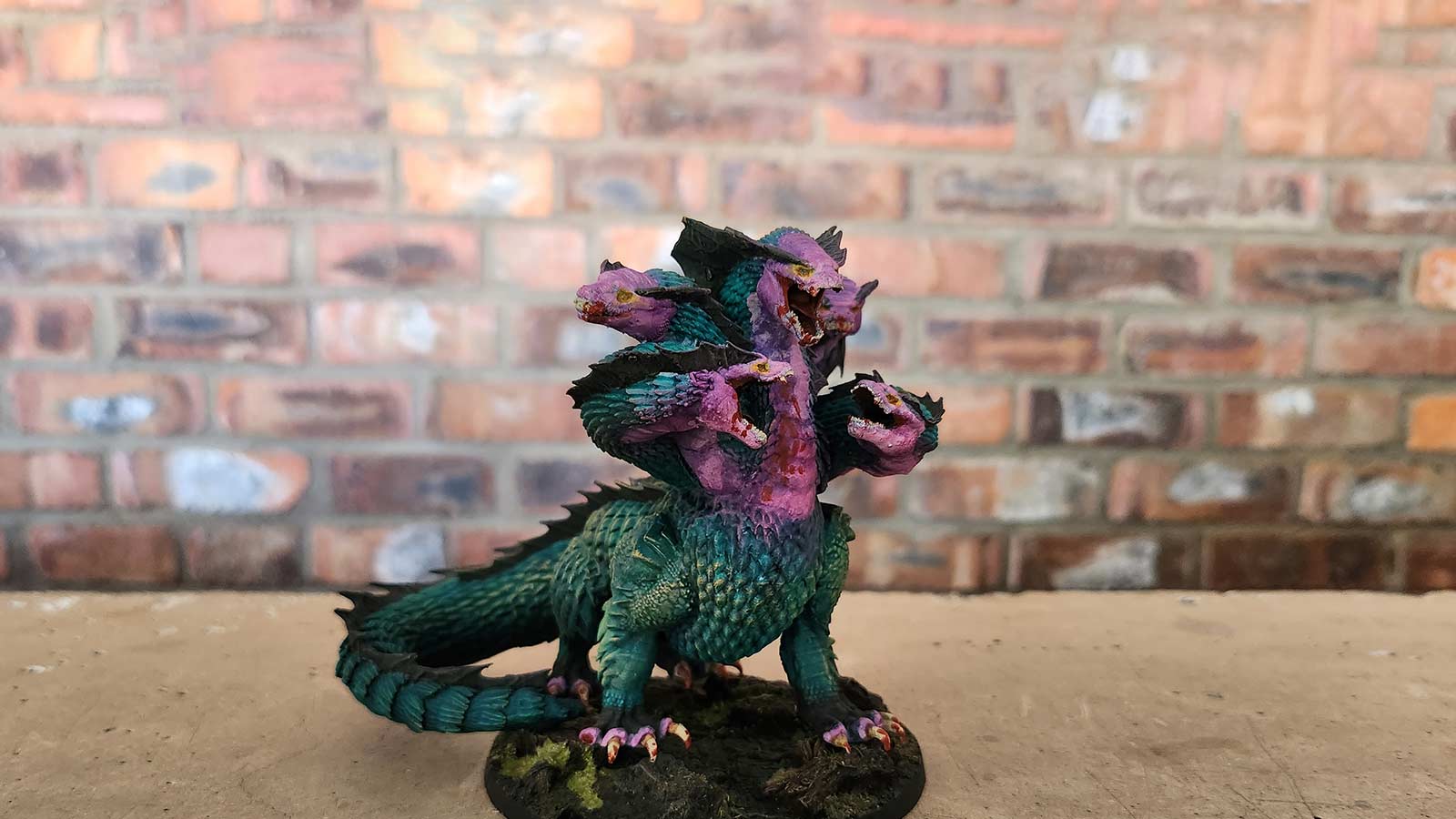
*sips coffee. Ah, yes, the wonderful world of 3D printing. Everything was going according to plan. Ok, not according to plan per se, but everything was working pretty much flawlessly and we were just printing whatever we could get our hands on. (uhm, cough, still waiting for my lifesize Mario figurine – Ed)
The plan was to print miniatures for our war games, and it just so happened that a frenemy had recently brought through a brutal ogre that absolutely destroyed the competition. The first official print for our war gaming nights would be a monster to counter this… monster.
We scoured the rule books looking for what we thought would be the best monster we could get. We decided upon a hydra! – a long, cough-filled, evil laughter echoes behind me. Once we had decided on the hydra, we had to find the meanest-looking one out there to print—no point in taking a hydra to an ogre fight that looks like some old snake.

Little did we know this hydra would be the true beginning of our 3D printing education.
The hydra would be the first multi-part print we would have attempted as well, meaning it would be printed in a bunch of smaller pieces that we would have to put together. It’s done this way because the mini is quite a big mini, too big to be printed in one go. This would be our first genuine hurdle.
I got all the pieces set up on the build plate as best I could, it was going to take 2 prints to get all the pieces printed, in theory. It did not. The first build plate had the main body and the head on it, as well as a smaller priest guy that I wanted for another army. 11 hours. ELEVEN. One-ty one whole hours. That was the print time for the first set of pieces to come through. That’s ok, we thought, we’d just let it print overnight, like a download in the early 2000s.
I woke up the following day, excited to see how the print had come out. I raced off to our undercover lab to uncover our latest masterpiece. It was a disaster. Well, not a complete disaster, but it looked like it at first. The headpiece for the hydra had fallen off of the build plate and decided to half-pancake itself in the resin pool. Two of the five heads made it. The body, although a little bit off of its original proportions, was about 95% right so we kept the body and had to re-do the next build plate to try to squeeze the head into the same print as the legs so that we could still get this thing done in two prints.
Because the resin printer takes longer for taller prints rather than the actual print amount, the overbearing heads we went with meant the second print was going to be another 11 hours.
Deep breath in. Before we just went ahead and printed it though, we had to try and figure out why it failed in the first place. This was our introduction to “hollowing”, removing all the excess resin from the inside of the object so that it is lighter and, we hope, will lighten the load of the head so it doesn’t land up falling off the build plate.
I hollowed out the head digitally and popped it on the file to be printed with the legs. We set the printer up for another 11-hour stint and kept our fingers crossed. All the while, we noticed that the previous models were not as great as we had first hoped. When the resin is cured, it’s quite brittle, and my friend, not me, never me, kept dropping them, and they would shatter on the floor. Not so great for tabletop gaming.
Slightly saddened by how our once glorious prints were sub-par, we pressed on. The Hydra had managed to print successfully, and because I kept it in my pile, it was safe from being dropped on the floor; mostly, it may have lost a toe or two.

During the hydra print, though, there were some other objects that didn’t fully print either. Sometimes, when resin prints fail, they can leave bits behind, damaging the film that protects the printer from the liquid resin. Knowing this we tried to do a vat clean, which solidifies the resin on the film to pick up all these left over bits. In doing so, we made a nice big hole in our film, rendering the whole printer useless until we could get a new one.
While it’s not a big deal to get a new film (or FEP as it’s known), we took this opportunity to take a step back and re-evaluate the quality of the prints and more so the durability of them.
After talking to the members of the 3D printing community, it was decided that the resin we used would need to change. And not just to one resin but to a mix of two. I hopped online immediately, and… they were out of stock.
Let the waiting game begin.