There are certain things in my life that I love, comics, horror and point-and-click adventures, for instance. However, despite my deep love for each of these independent of these things, it’s hardly ever the case that these interests align and comes together satisfyingly until I played The Blind Prophet, that is.
The Blind Prophet is a game best described as dark, melancholy and calamitous – a word which here means dreadfully disastrous. But if you think that’s bad, you don’t know or understand my tastes.
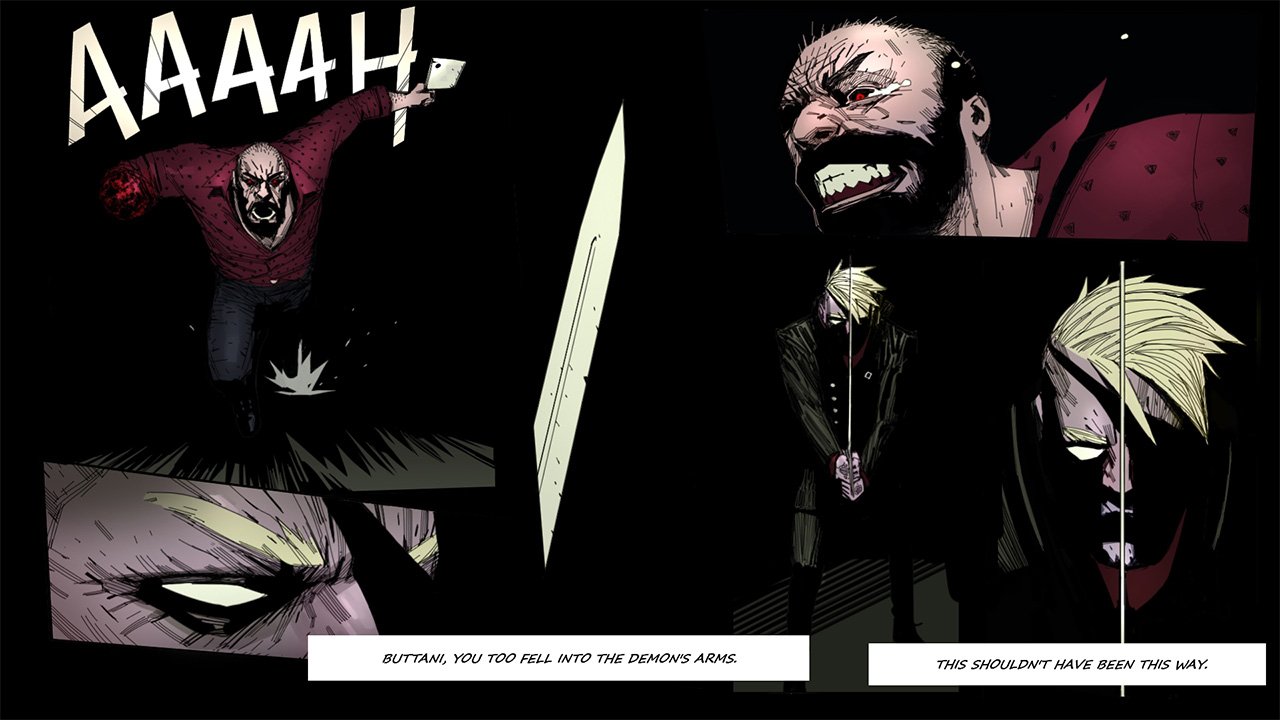
At its core, The Blind Prophet is a point-and-click adventure game that takes more than a bit of inspiration from the comics and graphic novels I adore. Players will take on the role of Bartholomeus, a two-thousand-year-old warrior from heaven known as an apostle. After arriving in the town of Rotbork, which demons have infiltrated, you find yourself investigating and hunting down those responsible for turning this town into hell on earth… literally.
Now over the years, I’ve played many demonology-inspired games. However, unlike many others, The Blind Prophet sets itself aside by forging humous and quirkiness almost entirely. The narrative is dark, and it never shies away from creating a story that is every bit as intense as it deserves.

As far as a point-and-click game goes, The Blind Prophet is pretty basic. Players are given four ways to interact with their surroundings in observe, take, use, or discuss, and that’s it. The only other mechanic the game boasts is an ability called “Stalker’s Eye”, which lets players highlight the interactable items in the environment. However, much like everything else in this game, this isn’t just a feature that feels thrown in – instead, it is well woven into the narrative and makes sense to be there.

Regarding collecting items, everything is pretty straightforward, to the detriment of the game. For the most part, items you pick up in a certain area will be used to solve a puzzle in that same area. This is further cemented by your character only being able to carry three items simultaneously. While this is hardly a deal breaker and does see to it that the point-and-click puzzles are generally more accessible, it did feel shallow and lacking and I wish there was more substance here to complement the heaviness of the rest of the game.