If I think back on my life, some games stand out as marking specific time periods growing up. For example, I will always think of Ape Escape and Spyro as core parts of my childhood. I spent hours lying on the floor of my parent’s lounge, holding a controller slightly sticky from gross children’s hands, trying with all my might to get Spyro to fly through all the or catch that last, elusive monkey.
If I think of my early teenage years, I see myself sitting in my room late at night, playing Silent Hill, sweat dripping from my brow and heart sitting in my throat. I also see all the hours put into Final Fantasy, wishing that my own Tidus or Cloud would turn up.
And if I think about my early twenties, I think about Life is Strange, the game that taught me it was okay to feel things. My whole life, I’ve stayed away from dramas and tragedies, favouring action or scares or comedy instead. However, after stumbling my way into Life is Strange one night, as a way to pass the time, I was instantly hooked. I found myself snapping back to reality, hours and hours later, a blubbering mess. After avoiding hard emotions for most of my life, I had just found myself hit in the face with all of them, and I wanted, no needed, more. Twin Mirror is just that.
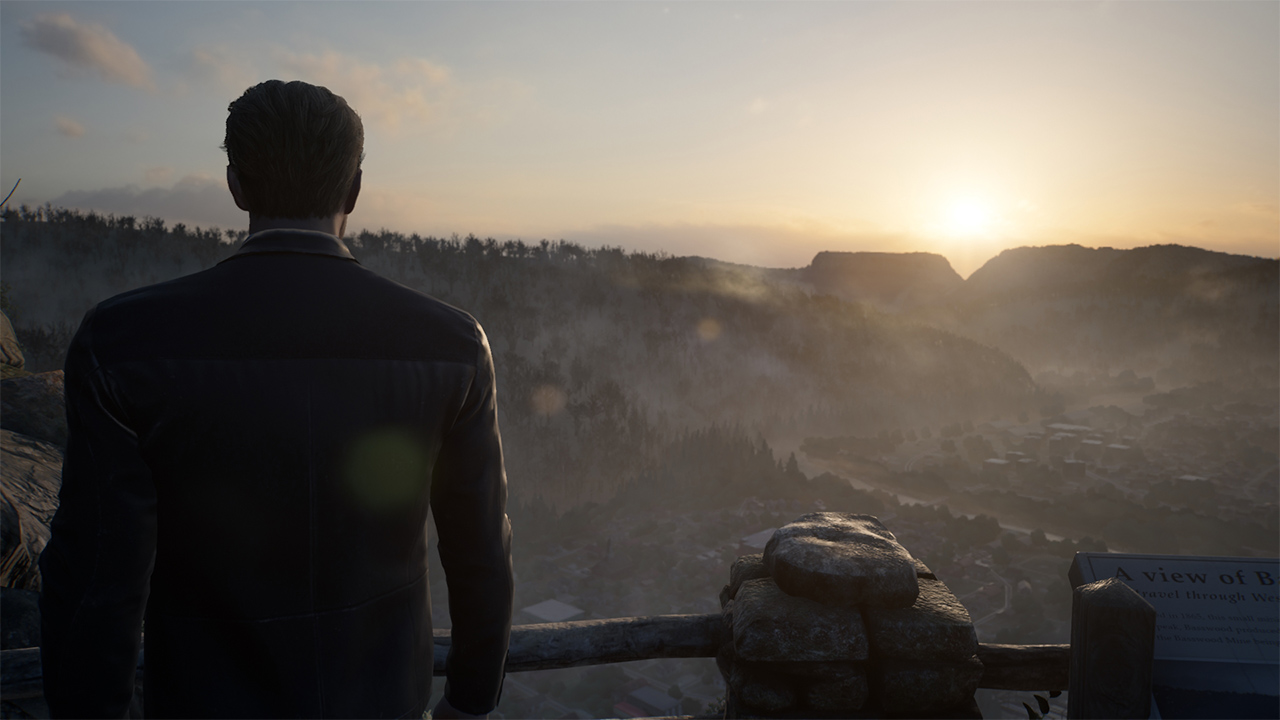
I’m going to only touch on the story of Twin Mirror in the briefest possible way because if you haven’t played it yet and you know nothing about the game, that’s precisely how you want to go into it. Essentially, you play Sam, an investigative reporter who finds himself returning to his hometown after the death of his best friend. Upon returning to town, his best friend’s teenage daughter corners Sam. She lets him know that she doesn’t believe her dad just died in an ordinary car crash. Instead, she believes her father had gotten too close to something or someone he shouldn’t have and asks Sam if he would look into it.

Just like that, you find yourself in the middle of an investigation, trying to get to the bottom of things while also putting your own life back together again, piece by piece. As with any good detective story, you’ll find yourself reading documents, uncovering clues and interrogating suspects while remembering key moments of your past and reconnecting with those you once called friends and neighbours.
At its core, Twin Mirror is about solving the mystery behind your best friend’s untimely death, but as can be expected from this type of game, it’s also about so much more. In the case of Twin Mirror, you’re also trying your best to piece together the life Sam abandoned when he left town. There is a particular type of beauty in slowly making things right with those you love and hashing out unfinished business with those you loved; that’s hard to explain when you’re not in the driver’s seat.
Through my time in Twin Mirror, I helped Sam get closure with an old girlfriend, an act that not only helped him be able to move on but that felt like I was dealing with my past letdowns and traumas at the same time. However, one of the best relationships to explore throughout the game is between your character Sam and his best friend’s teenage daughter, Bug. There’s so much to unpack between the two of you, her sadness at having lost her father, her anger at having been abandoned by you and her palpable irritation at her emotionally distant mother.
The only problem I could find with Twin Mirror was its length. At roughly 6-7 hours, it felt a lot like moving to a town, learning the names of your neighbours, finding your favourite coffee place and then abruptly being kicked out.