FAR: Changing Tides is the sequel to the wildly popular game, FAR: Lone Sails and if I’m being honest the game feels a whole lot like going on a roadtrip to the middle of nowhere with an already broken car and constantly having to patch it while you drive. As in the first game, the story is told with no words, and you’re expected to make your way from point A to point B using your wits and intuition to complete the journey. It’s also, at its core, a micromanaging game, and if you played the first title and felt put off by this, I warn you: It was just a warm-up for the micromanagement of FAR: Changing Tides.
I found it hard ever to allow myself to relax throughout my time in FAR: Changing Tides. Every time I reached a part of the game when it was just me, my ship and the vast open water, the game seemed to become aware of my change in stress levels and decided to drive them right back up again. Everything in the game requires constant babysitting and constant vigilance. Want to sail your ship forward? Well, get ready to raise your mast, climb it, grab a rope, jump down, attach the rope to a hook and then sit and adjust the position of the sails to match the direction of the constantly changing winds. And that’s when it’s going well, and everything isn’t knocking down your mast, causing you to be trapped in your very own Twilight Zone of micromanaging hell.
If you think sailing is too high-stress for you, well, then don’t worry, FAR: Changing Tides has even more ways to deliver its stress to you. You always have the option of hopping down into your ship to manually fuel and fan it forward. Scavenge fuel from the ocean around you, carry the fuel to the furnace, throw it in and then start jumping up and down to fan the flames, all while making sure your engine doesn’t overheat. But if it does overheat, don’t worry; you can just run and depress the release valve before starting all over again – while desperately hoping your ship hadn’t hit into anything during this process.

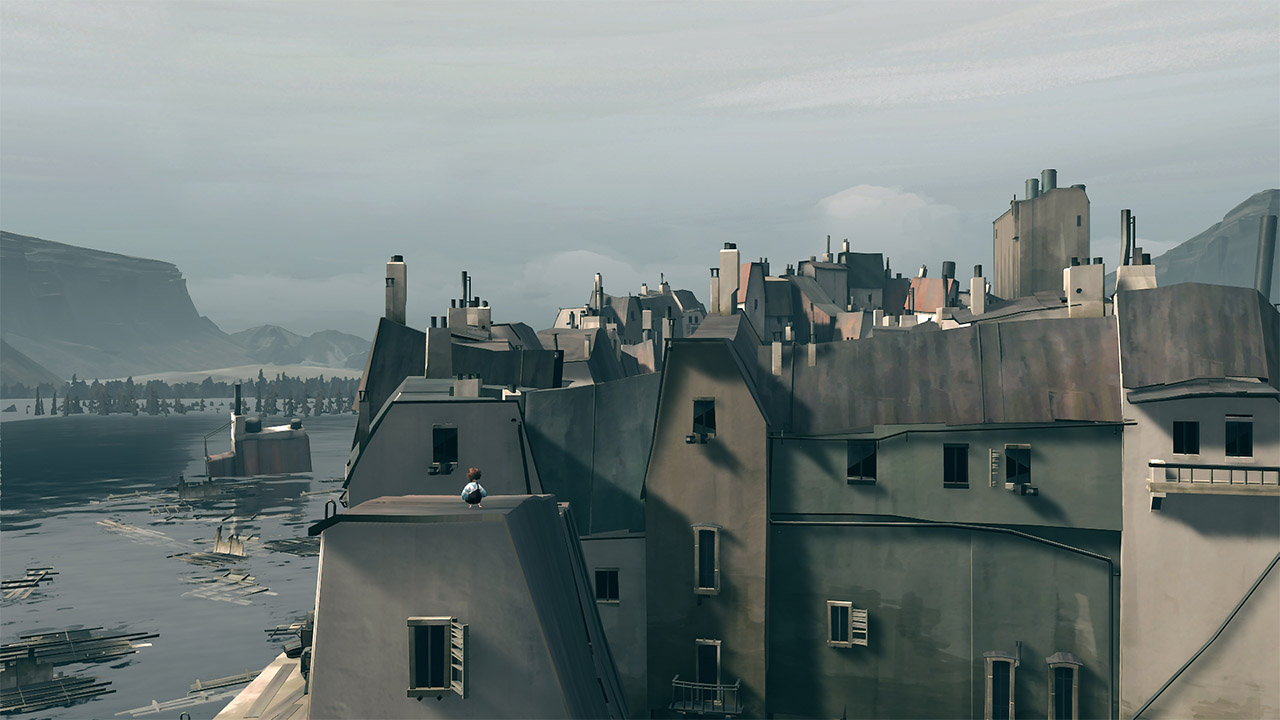
While my favourite part of the game itself is the beautiful scenery and the simple yet standout graphics, it’s also here that things start to feel frustrating for me. Now admittedly, I don’t have the best eyesight in the world; becoming a fighter pilot is probably not in my future, but in the same breath, my eyes also aren’t the worst, and I never struggle to see things in games, usually.
With FAR: Changing Tides, I found my finger constantly in a state of stress from continually holding in the trigger just so that I could be slightly more zoomed in to see what on earth was going on. The character you play is almost comically tiny, and more than once, I found myself wishing there was an option for me to play with my camera permanently zoomed right in just so that I could see.
However, part of this game’s constant micromanagement is also managing when you want to see your character and when you want to see everything else. I constantly had to zoom in to do the most basic of tasks then zoom out to make sure my ship and or sail wasn’t going to hit into something, but in which case, I could no longer see my character. It was just a nightmare and one I found myself quickly growing tired of.