The last few years have been rather exciting in terms of the entry-level and mid-range smartphones that came to market. When it comes to performance versus price, Android users have loads of options these days and for just a few thousand rands, you can snag yourself a brand new, game capable, smartphone.
As a big fan of mobile gaming, I’ve gamed on everything from the cheapest grey-import device to the most ridiculous high-end smartphone. We’ve come a long way over the last couple of years and one thing is for certain, you do not need to spend tens of thousands of rands on a smartphone if you don’t want to. There are plenty of options for a really good smartphone for around R5,000.
One of these options come from a brand you may not have heard of, POCO. Launched a mere two years ago as a sub-brand under Xiaomi, POCO set out to deliver affordable smartphones to a global audience. In 2020, POCO moved away from its parent company and now runs independently from Xiaomi. Having said that, POCO still uses hardware manufactured by its former parent company. This is not a bad thing, Xiaomi has fast become one of the top tech brands around and their smartphone hardware is of the best around, in my opinion.
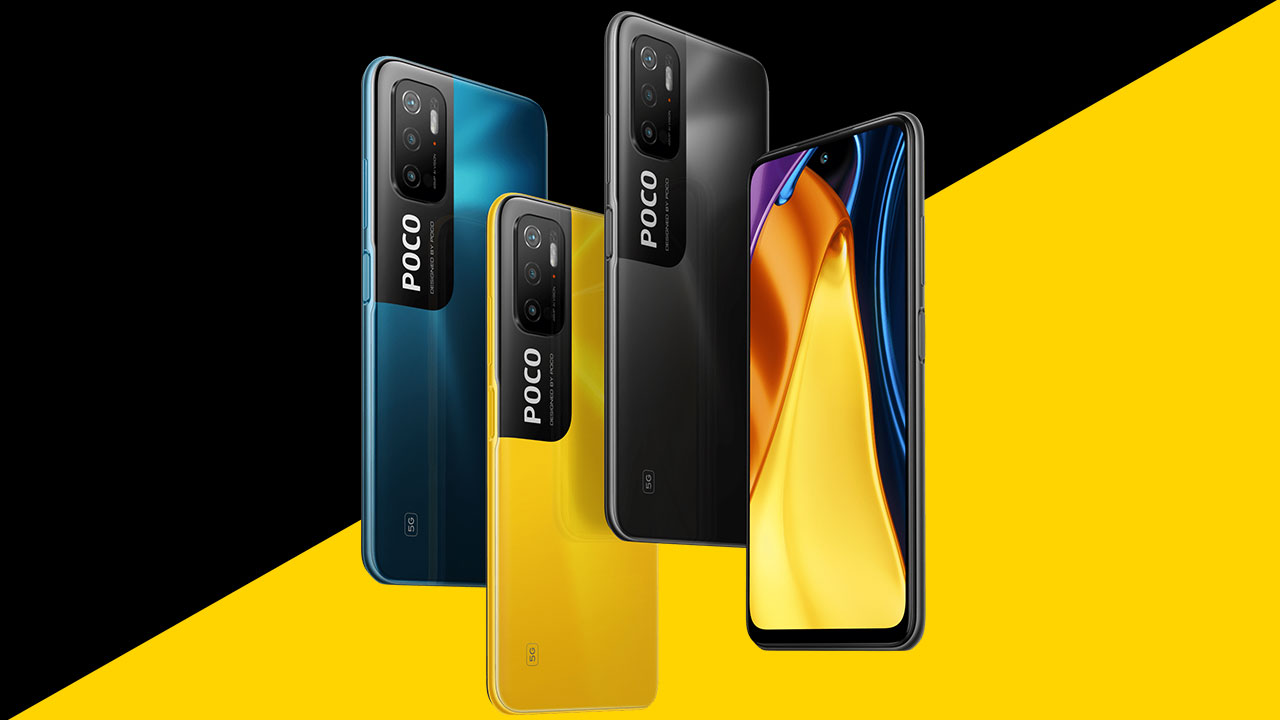
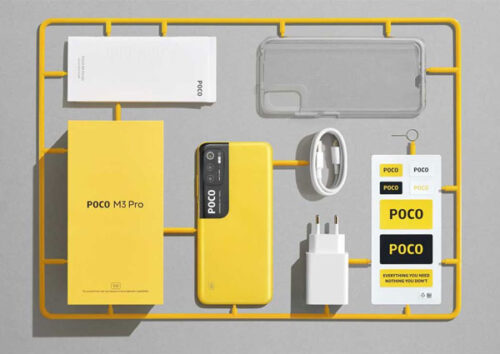
Just like its bright yellow box with minimalist branding, the new POCO M3 Pro makes a big statement. It has all of the features you’d want from a smartphone, plus a few extras to sweeten the deal. First on my list of things I really like about the POCO M3 Pro is the 90Hz refresh rate on the 6.5-inch LCD. Then there is the 6GB of RAM and 128GB of built-in storage. There’s also a dual-sim slot available but if you want to expand your internal storage, you’ll have to sacrifice the one sim slot.

While the screen does support 90Hz refresh rates, not all mobile games have this feature unlocked yet. One of South Africa’s favourite mobile games, PUBG Mobile, supports 90fps gaming but the POCO M3 Pro is not yet on the list of supported devices. I expect this to change with a future update of the game.

Under the hood, the POCO M3 Pro is powered by the MediaTek Dimensity 700 processor and this is probably the only major differentiator between this and high-end smartphones. While the MediaTek processors don’t quite run as fast as their more expensive Qualcomm processors, the bang for your buck here is really impressive.
For gaming, this processor is more than sufficient to give you a great gaming experience, no matter the games you like to play. I put a few hours of PUBG Mobile in on the POCO M3 Pro and it handled the game beautifully. Even graphics-intensive racing games like Asphalt 9 managed nicely on this smartphone.
You’ll also be glad to know that this smartphone runs Android 11 with Xiaomi’s MIUI 12 user interface so you’ll have the same user experience as you do with other devices from the company. It’s a slick UI that looks even better when you have enabled the 90Hz refresh rate in your settings menu – yip, you need to enable it manually, so keep that in mind if you get this phone.
Looking at the other features we love to use most often, the camera on the POCO M3 Pro is also pretty impressive. The main camera features a 48-megapixel sensor and it can record video at 1080p at 30fps. Both the video and photo quality is impressive and most consumers would not need more pixels to capture their memories.

Having used the POCO M3 Pro for a few weeks now, I was pleasantly surprised with how well it performed in my day-to-day life. In terms of performance, it held its own and I was not even concerned with the plastic-back on this phone, it feels great in hand and with the noticeable branding, this phone was a bit of a conversation starter too.
Other noticeable features include the fingerprint reader on the power button located on the right side of the phone, the inclusion of a 3.5mm audio jack, and a USB-C charging port. I’m not really a fan of side-mounted fingerprint readers but it worked well enough and unlocked the phone accurately, and quickly, every single time.
At just over R4,000, the POCO M3 Pro is one of the best value-for-money smartphones you can buy at the moment. Oh and I forgot to mention that this smartphone also supports 5G connectivity so if you are in a 5G area, you could make use of the numerous unlimited 5G data packages that are available these days.