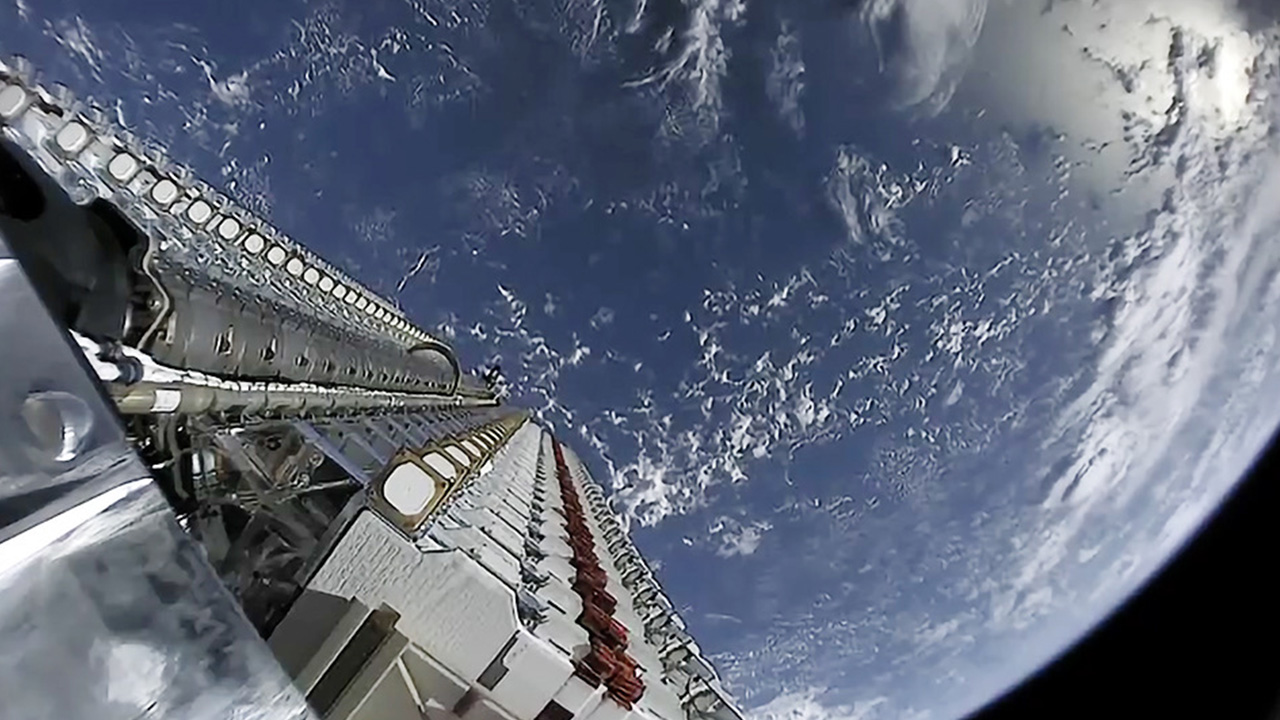
You could be playing Fortnite with the power of space internet when Starlink arrives in SA in 2022.
Starlink is currently in the beta phase of its internet rollout with pre-orders recently opening up to South Africa after the service already launched in the UK, Germany, Poland, USA, Canada, Australia, and New Zealand. We won’t be the first in Africa to get connected, though. Nigeria beat us to it.
Starlink is a division of Elon Musk’s aerospace company SpaceX and its goal is to provide internet to all the people of the world (especially those in rural areas) by using satellites to beam broadband internet down to receivers on Earth. As of April, there are currently over 1,400 Starlink satellites orbiting our planet, but the company intends to launch tens of thousands more to improve connectivity and reduce downtime.
But how does space internet compare to fibre? Currently, Starlink provides data speeds between 50Mbs and 150Mps with latency between 20ms and 40ms. This will only improve as they launch more satellites. Before you get all excited, we don’t know what it will cost yet. There is a refundable priority access deposit of $99 (about R1,431) to get first dibs on the Starlink Kit (which includes a wifi router, power supply, cables, and mounting tripod) when it becomes available, but South African prices for the kit and monthly subscription have not been confirmed.
To give you some idea what to expect, in the USA the kit costs $499 (about R7,214) and the subscription is $99 (about R1,431) per month. You can get similar speeds for less on local fibre, but it depends entirely on where you live. Rural areas often pay an obscene amount more for far less.
Starlink is a little trickier to set up than your average fibre line, requiring an unobstructed 100-degree cone of vision between the receiver and the sky, because satellites. The connection is also more sensitive to weather conditions, like heavy rain and wind, which will cause slower speeds and the occasional outage.
I don’t see Starlink replacing city and suburban fibre any time soon, but it could be an excellent choice for more middle-of-nowhere settlements, currently way underserved by local providers.
Via Business Insider.