In 2009, Shadow Complex launched on the Xbox Live Arcade. Developed by Chair Entertainment, the game was a mashup of Metroidvania mechanics, supersonic hi-tops, and a tech-dystopian narrative that was kind of hard to keep up with between the lasers and foam. The game was also based on a novel by distinguished sci-fi writer and less distinguished homophobe Orson Scott Card, and this was controversial. Can you separate the game from the people involved in making it? Let’s discuss.
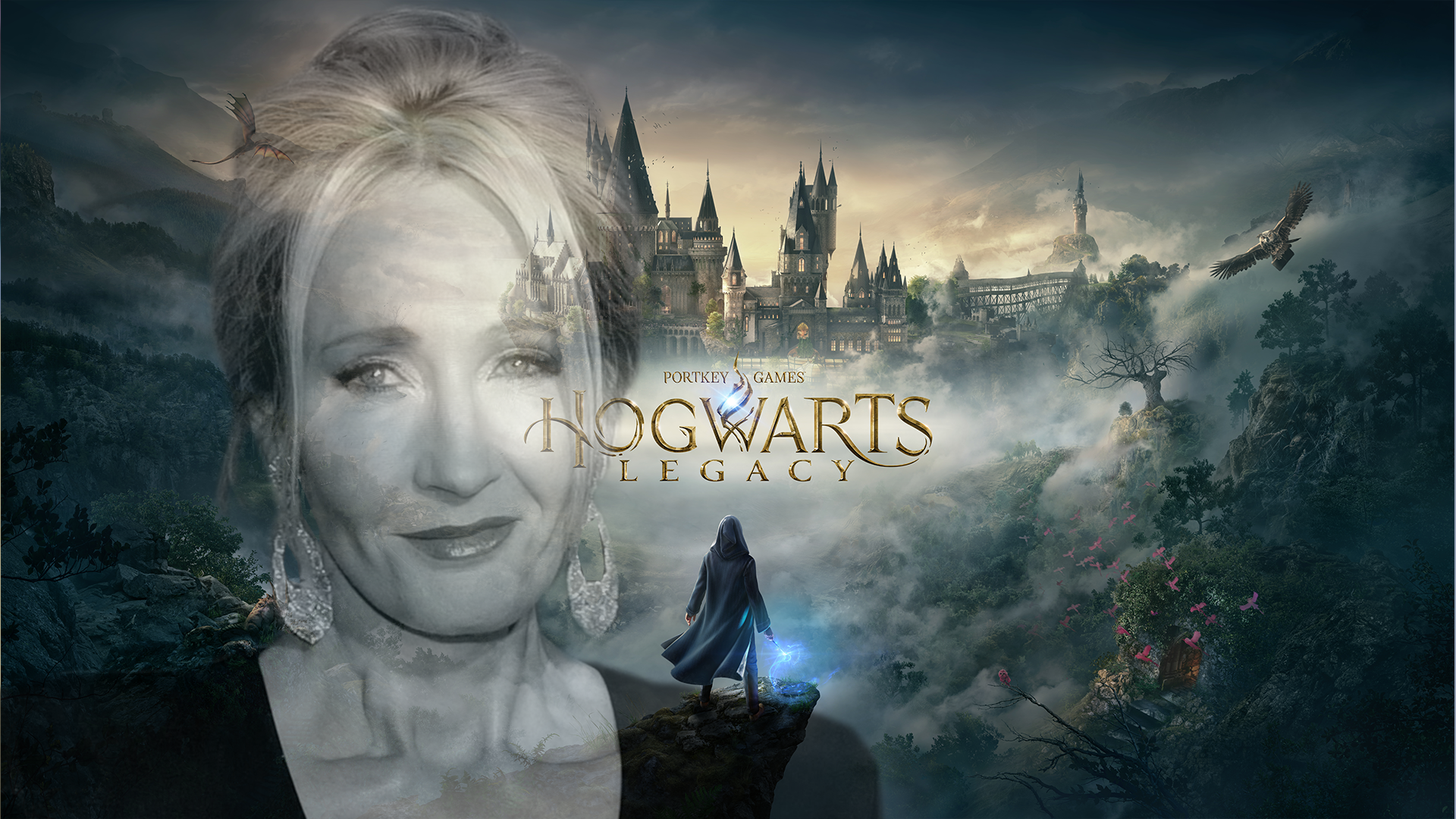
It’s an awkward subject that’s back in the news this week with the debut of Hogwarts Legacy, a new Warner Bros game promising players the unprecedented opportunity “experience life as a student at Hogwarts School of Witchcraft and Wizardry like never before, as they live the unwritten and embark on a dangerous journey to uncover a hidden truth of the wizarding world” – a prospect that would have been intriguing in 2005, maybe, but not so much in 2020. Because of the other Hogwarts Legacy, and you can’t even make up irony like this.
If you don’t know what the “other Hogwarts Legacy” is, that’s okay – it means you don’t waste time (and sanity) on Twitter like me. But I’m going to explain the situation because it’s relevant, obviously, and context is important.
Harry Potter author JK Rowling has some, uh, contentious opinions about transgender and gay people. It’s a complicated mess of social politics and -isms, and I realise that opinions about those things are necessarily diverse, and my opinions are my opinions, and her opinions are her opinions. But her opinions are wrong. That’s my opinion.
We don’t have time to get stuck into the this-and-that of those opinions at the moment, but the Internet Drama Diary 2020 summary is that Rowling is a what-about-the-toilets trans-exclusionary feminist and publishes crime novels under the pseudonym Robert Galbraith – two-thirds of the name Robert Galbraith Heath, a psychiatrist who experimented with gay conversion therapy in the 1950s. She claims it’s a coincidence, but what a coincidence.
And so, like Shadow Complex and The Fake Sound of Progress and Roman Polanski’s entire filmography, Hogwarts Legacy is now controversial too. Which sucks, because in each of those examples, the source of that controversy in one person out of the dozens of others who worked on those projects. The cast of the Harry Potter movies, for example – including stars Daniel Radcliffe, Emma Watson, and Rupert Grint – has publicly criticised Rowling’s opinions. So have some of the Hogwarts Legacy developers.
Talking to Bloomberg, a number of anonymous Avalanche Studio employees explain that it’s been “uncomfortable” for some of them.
Within the team, though, some anxiety surrounds the work. The studio’s management has not addressed recent comments from the author J.K. Rowling that were widely viewed as transphobic, the people said. The situation made some members of the team uncomfortable and sparked private discussions among staff over the pandemic water cooler, the workplace communication app Slack.
And what about us? The question of ethics is difficult, and the answer, even more so.
Deciding whether or not to purchase a game like Hogwarts Legacy is entirely your prerogative. For a lot of gamers, JK Rowling’s opinions are so what, and totally inconsequential. Some of you, perhaps, choose to support the developers over Rowling’s social media timeline. And others think transgender and gay people are delusional, and Rowling is a tragic victim of “cancel culture”, and they’re wrong but that’s their prerogative too. If controversy serves no other purpose, it’s to start discussions like this one.
EPILOGUE
This should’ve been “Harry Potter and the question of ethics”, but I clicked to publish it anyway, so now I’m bummed and my Xmas bonus is a victim of cancel culture too.