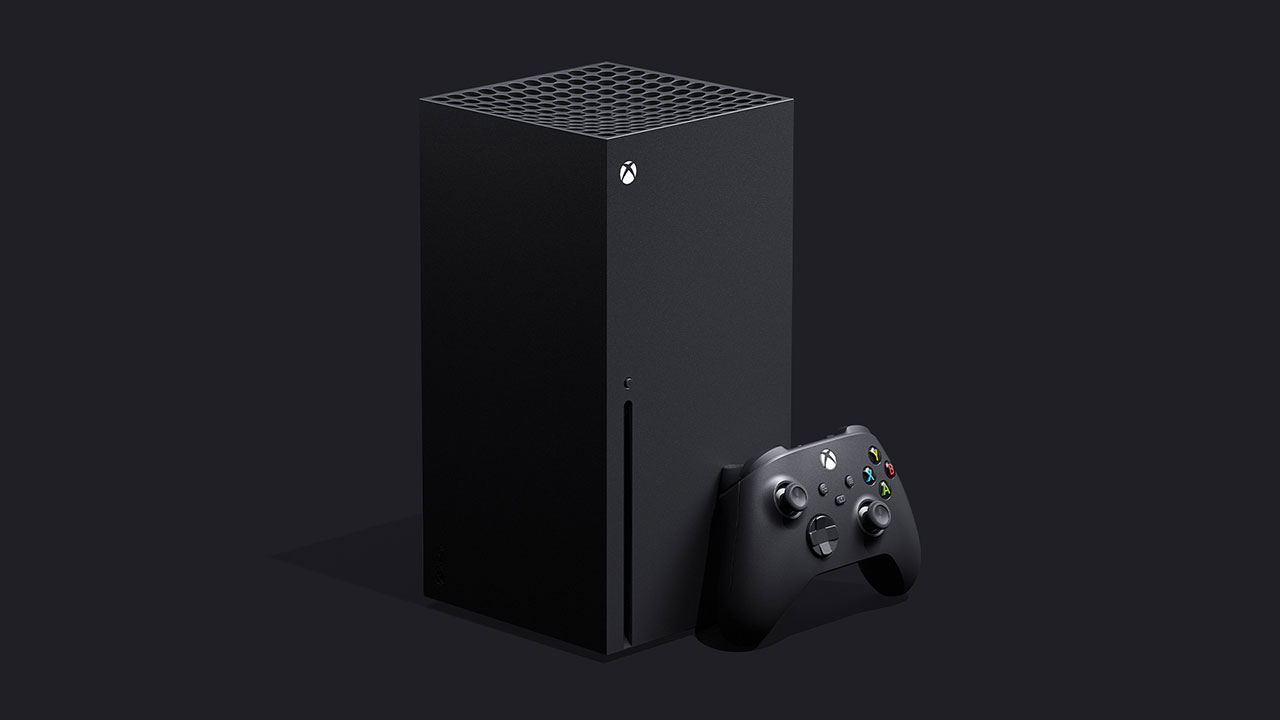
For those of you keeping count on your fanboy Excel spreadies at home, Microsoft has now published the Fridge-O-Matic 3000’s complete numbers – including CPU and GPU clock speeds, hard drive capacity, and more.
According to Xbox Wire editor Will Tuttle, the Xbox Series X is designed to be “the most powerful Xbox ever”, which isn’t exactly unexpected. But what is “power” in this context, anyway?
In past generations, power has been defined primarily by graphics innovation: from the transition from 8 bit to 16 bit graphics, 2D to 3D, SD to HD and finally to 4K.
Today, gamers are demanding more and more games run at 60 frames per second (fps) with high visual fidelity and precise, responsive input. Developers have come up with creative solutions, such as dynamic resolution scaling, to maintain high image quality while not compromising on frame rate, but this is often done to work around the limitations and constraints of current generation hardware. That’s all about to change with Xbox Series X. It’s not just about making games look better, though. It’s about making games play better too.
Besides power, the Xbox Series X’s other primary class stats are speed and compatibility.
Modern devices have changed our expectations on how quickly you can move between experiences or applications. Most of us want to be able to instantly jump into an experience or return right to where we left off. This influenced the team designing the system architecture, as they wanted to ensure they enabled gamers to spend more time playing and less time waiting.
Most significantly, perhaps, the next-gen console introduces a hyper-fast internal 1TB solid-state drive (SSD), with transfer speeds of up to 2.8 GB/s, plus extra ports for USB HDDs and expansion cards. The console also features support for Microsoft’s new proprietary “Xbox Velocity Architecture”, which reduces load times and optimises the streaming of in-game content to accommodate much bigger, more dynamic game worlds.
In terms of compatibility, the Xbox Series X supports not just Xbox One and Xbox 360 games, but also existing Xbox One controllers and other accessories, and even game content like saves.
Players will see the benefits of the improved hardware of Xbox Series X for backwards compatible games, including improved boot and load times, more stable frame rates, higher resolutions and improved image quality. The Compatibility team is also continuing to create entirely new techniques and innovation that we can use to further enhance the existing catalog of games when running on Xbox Series X.
And in actual numbers…
XBOX SERIES X SPECS
| CPU | 8 x cores @ 3.8 GHz (3.66 GHz w/ SMT), custom AMD Zen 2 CPU |
| GPU | 12 TFLOPS, 52 CUs @ 1.825 GHz custom AMD RDNA 2 GPU |
| Die Size | 360.45 mm2 |
| Process | 7nm enhanced |
| Memory | 16GB GDDR6 w/ 320mb bus |
| Memory bandwidth | 10GB @ 560GB/s, 6GB @ 336GB/s |
| Internal storage | 1TB custom NVME SSD |
| I/O throughput | 2.4GB/s (raw), 4.8GB/s (compressed, with custom hardware decompression block) |
| Expandable storage | 1TB expansion card (matches internal storage exactly) |
| External storage | USB 3.2 external HDD support |
| Optical drive | 4K UHD Blu-ray drive |
| Performance target | 4K @ 60FPS, up to 120FPS |
The Xbox Series X launches this holiday season.